
What Is Stacking in Pickleball?
Stacking is a doubles pickleball positioning strategy where both partners line up on the same side of the court just before the serve or return, then move (or “switch”) to their preferred sides as the point begins. In a normal game, the side each player stands on is decided automatically by the score and the standard pickleball scoring system.
Stacking lets a team override that rotation and choose who covers the left and who covers the right on every single point, so each player can stay on the side that suits their game.
Why Do Players Stack?
Stacking only exists because of one simple idea: you play better when your strongest shot is in the right place. The most common reasons teams stack are:
Keeping forehands in the middle. Most balls in doubles travel up the middle, so many teams stack to keep both players’ forehands pointed at that high-traffic zone instead of their backhands.
Pairing a lefty and a righty so both forehands cover the center of the court.
Protecting a weaker backhand or keeping a stronger player on the side that sees the most action.
Staying consistent, so each partner plays the same side regardless of the score.
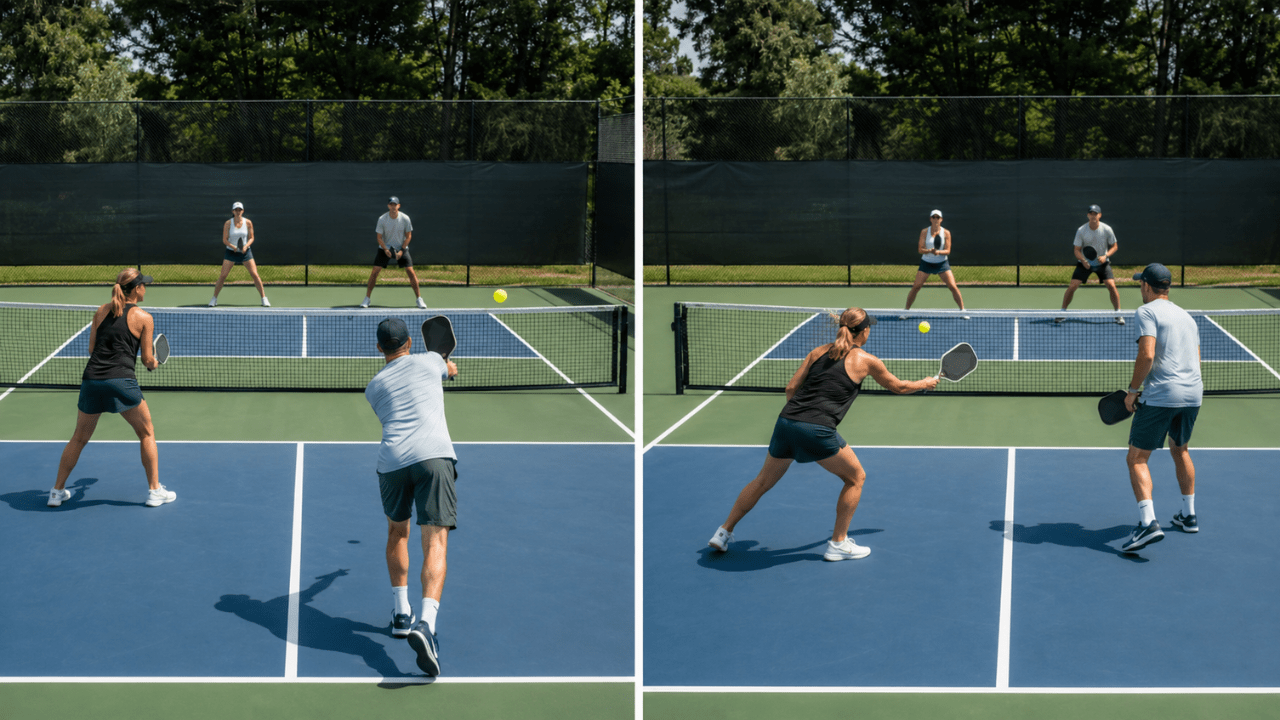
Stacking on the Serve vs the Return
Stacking on the Serve
When your team is serving, the correct server must serve from the correct side based on the score (right/even or left/odd court). The server’s partner simply stands off to one side, near the sideline, so that the moment the serve is struck, both players can slide into their preferred positions. Because only the server has a fixed starting spot, stacking on the serve is the easier version to learn.
Stacking on the Return
When your team is returning, the correct receiver must return from the correct service court. To stack, the receiver’s partner waits off to the side, and the receiver moves across to their preferred side right after hitting the return. This requires a bit more footwork and timing, because you are crossing the court while the rally is already live.
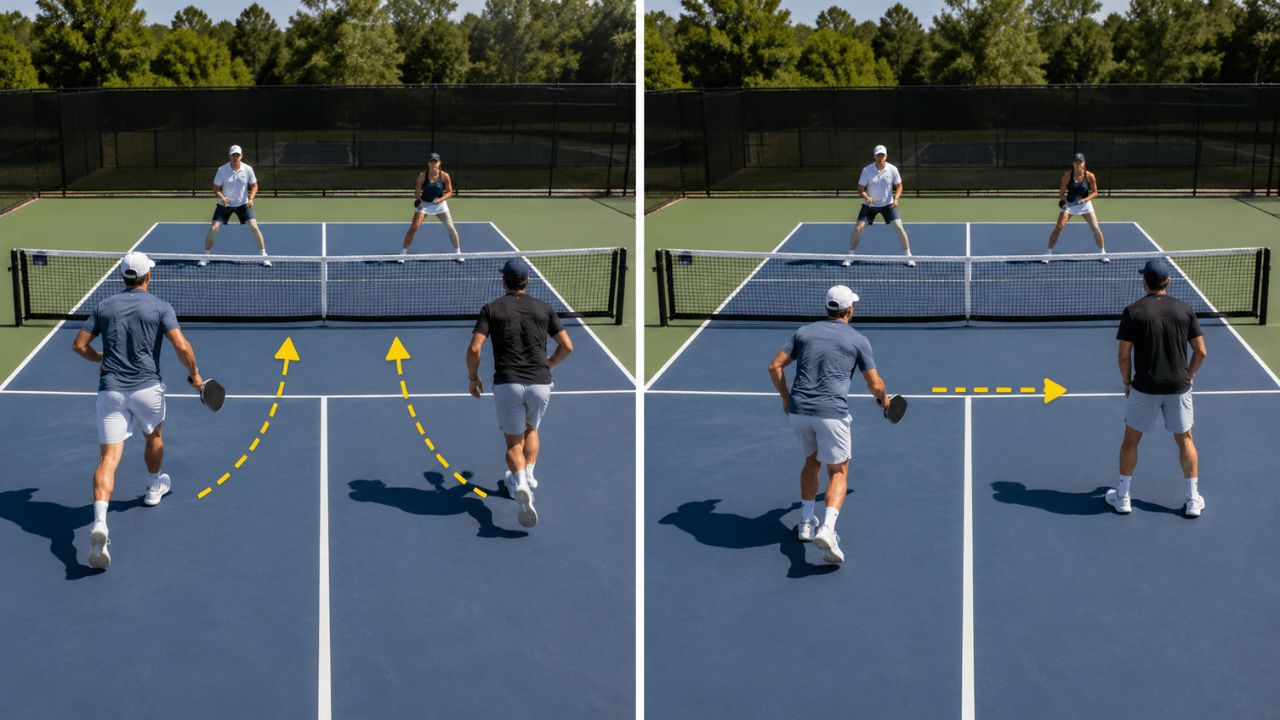
Full Stack vs Half Stack
Full Stack
A full stack means you stack on both the serve and the return, so you and your partner end up on your preferred sides on every point. It gives the most strategic advantage, but it also demands the most movement, communication, and coordination, which is why it suits more experienced teams.
Half Stack
A half stack means you stack only in the specific situations that matter, most often only when your team is serving or only when the rotation puts a player out of position. It is the version most beginners and intermediate players should start with, because you add stacking gradually, in the moments where it actually helps, instead of managing it on every point.
Is Stacking Legal in Pickleball?
Yes. Stacking is completely legal under USA Pickleball’s official rules. The only requirement is that at the moment the ball is served, the correct server and the correct receiver are in the correct positions for the score.
Both players’ partners can stand anywhere they like, including off the court near the sideline. Once the ball is struck, all four players are free to move wherever they want. As long as you serve and receive from the right spots, you are playing within the rules.

How to Communicate: Hand Signals and Calls
Because stacking involves planned movement, partners need to agree on who switches and who stays. Many teams use simple hand signals behind the back: an open hand for “switch” and a closed fist for “stay.” Others just use quiet verbal calls like “switch” or “stay” before the serve.
Usually, the player at the non-volley zone gives the signal so their partner knows the plan before the point starts. Whatever you choose, keep it simple and agree on it before the match so there is no confusion mid-rally.
Stacking Mistakes Beginners Should Avoid
Serving or receiving from the wrong court. This is the most common stacking error, and it is a fault, so always track the score and your correct side. Reviewing the rules of the game first makes stacking far less confusing.
Switching too early, before the ball is struck, which can leave an open gap or put you in an illegal position.
Colliding or hesitating in the middle because no one called to take the center.
Over-stacking when it isn’t needed. Stacking on every point adds movement and chances for error; many of these common mistakes disappear when you start with a simple half stack.
Beginner-Friendly Tips to Start Stacking
- Start with a half stack in just one situation, usually when you are serving.
- Always know the score so you can confirm your correct serving and receiving side.
- Practice the switch slowly, building clean footwork and positioning at the kitchen line before adding speed.
- Agree on clear hand signals or verbal calls with your partner before each match.
- Add full stacking only once the half stack feels automatic.
Practice Stacking With a Consistent Ball
Stacking is all about reading the ball early and moving with confidence, which is much easier when the ball flies true every time. A ball with an unpredictable bounce makes it hard to time your switch and trust your positioning.
Evolute’s EV-11, a set of USAPA-approved recycled pickleballs, is built for consistent bounce and stable flight that meets USA Pickleball approved-equipment standards, so you can focus on learning the strategy instead of guessing what the ball will do, while playing with gear made from ocean-bound, recyclable material.
Key Takeaways
- Stacking is a doubles positioning strategy where partners line up on the same side, then switch to their preferred sides after the serve or return.
- Teams stack mainly to keep forehands in the middle, pair a lefty with a righty, or protect a weaker side.
- A full stack is used on both serve and return; a half stack is used selectively and is the best starting point for beginners.
- Stacking is fully legal as long as the correct server and receiver are in the correct positions when the ball is served.
- Clear hand signals or verbal calls keep partners coordinated and prevent confusion mid-point.
- A consistent, true-flighting ball makes the timing and footwork of stacking much easier to learn.