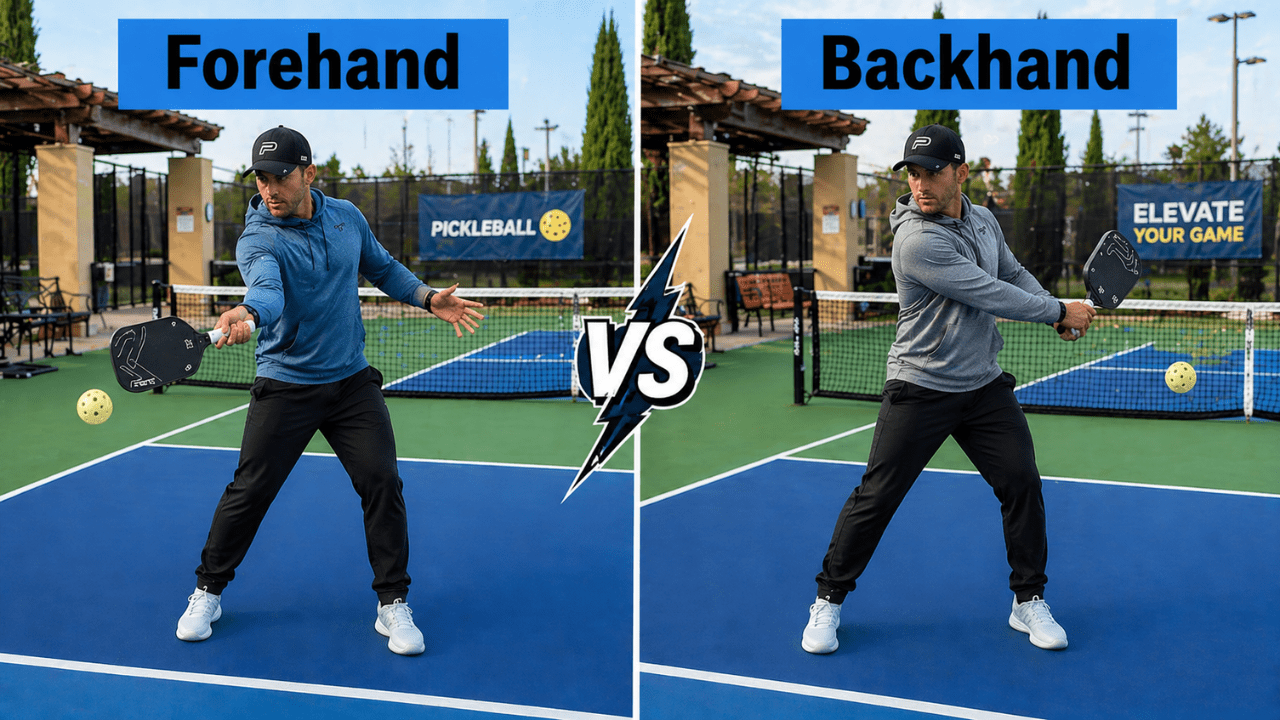
Every rally in pickleball comes down to decisions. Should you attack, reset, dink, drive, or defend? Before any of that, there is an even more basic choice that shapes every point: forehand or backhand.
Understanding Forehand vs Backhand in Pickleball is one of the fastest ways to improve consistency, reaction speed, and confidence on court. Whether you are a beginner learning fundamentals or a competitive player refining shot selection, knowing when to use each side matters.
At Evolute Pickleball, we believe smarter play and better equipment go hand in hand. The more efficient your mechanics become, the more enjoyable the game becomes. Let’s break down how forehands and backhands work, when to use them, and how top players maximize both.
Why Forehand vs Backhand Matters in Pickleball
Pickleball is fast. The court is compact, exchanges happen quickly, and many points are decided near the kitchen line.
That means you often have limited time to decide:
- Which side of your body should take the ball
- Whether to step around for a forehand
- Whether a compact backhand is the better option
- How to maintain positioning with your partner
Players who understand this decision-making process make fewer unforced errors and control rallies more often.
If you also want to improve point-winning decisions, our guide to pickleball shots that wins most points that win the most points can help you build smarter patterns of play.
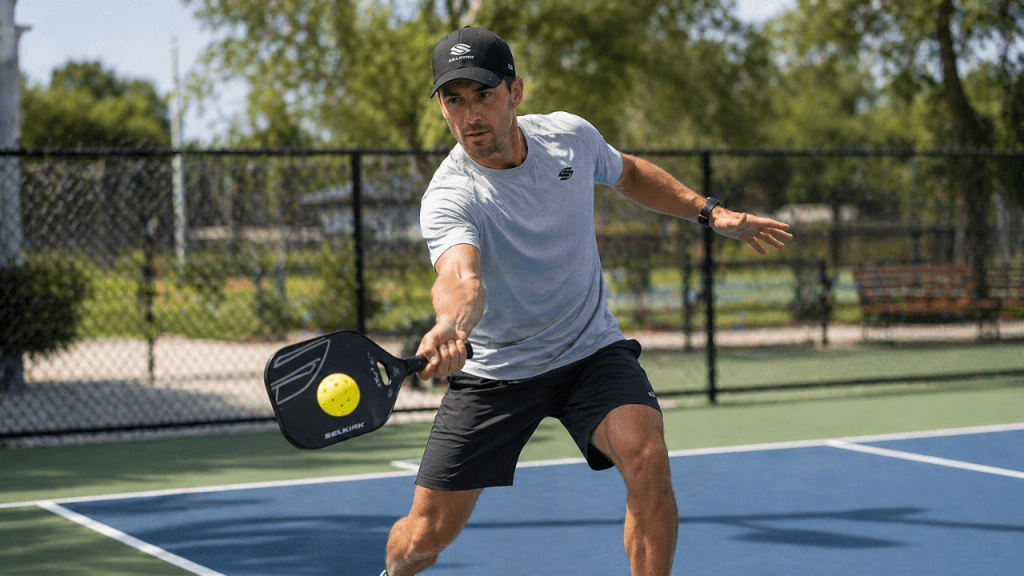
What Is a Forehand in Pickleball?
A forehand in pickleball is hit from your dominant side.
- Right-handed players hit forehands on the right side
- Left-handed players hit forehands on the left side
During contact, the palm side of your hand faces the direction of the shot.
Why Players Like the Forehand
For most people, the forehand feels more natural because it allows:
- Better reach
- More power
- Easier topspin generation
- Stronger offensive drives
- Comfortable overhead mechanics
Because of this, many players prefer taking middle balls with their forehand in doubles.
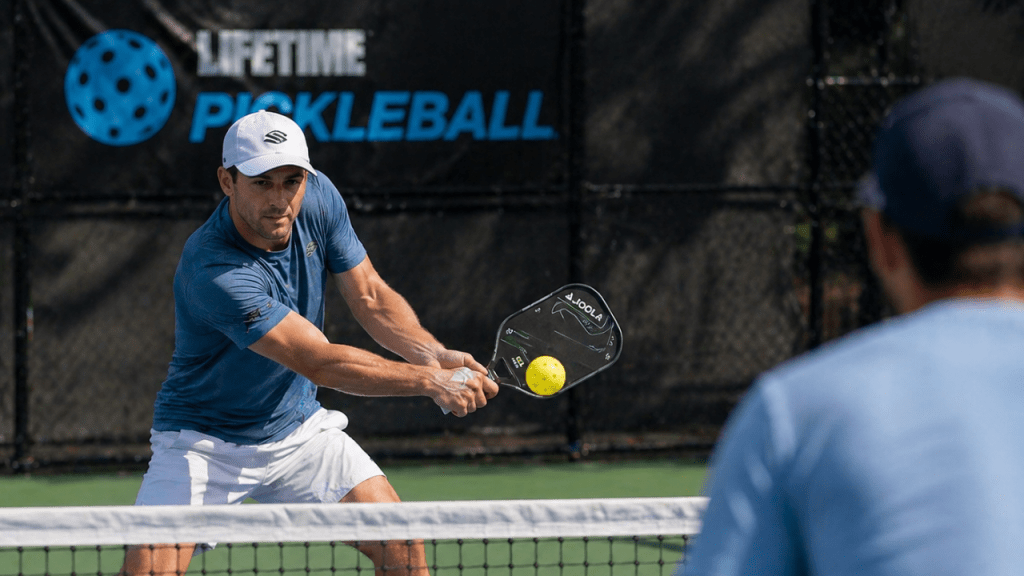
What Is a Backhand in Pickleball?
A backhand in pickleball is hit from your non-dominant side.
- Right-handed players hit backhands on the left side
- Left-handed players hit backhands on the right side
At contact, the back of your hand faces the target direction.
Why the Backhand Is Essential
Many beginners avoid the backhand. That is a mistake.
A strong backhand helps with:
- Fast hand battles at the kitchen
- Blocking hard drives
- Crosscourt dinks
- Quick counters
- Defending body shots
At higher levels, players with weak backhands are often targeted repeatedly.
Pickleball Backhand vs Forehand: Which Is Better?
The honest answer: neither is universally better.
Each shot has advantages depending on the situation.
Forehand Usually Wins In:
- Power drives
- Passing shots
- Overheads
- Wide reach balls
- Aggressive attacks
Backhand Usually Wins In:
- Fast reaction volleys
- Compact counters
- Middle body defense
- Tight kitchen exchanges
- Balls jammed close to your torso
The best players do not ask which is better. They ask which is correct for this ball.
That is the heart of pickleball shot selection.
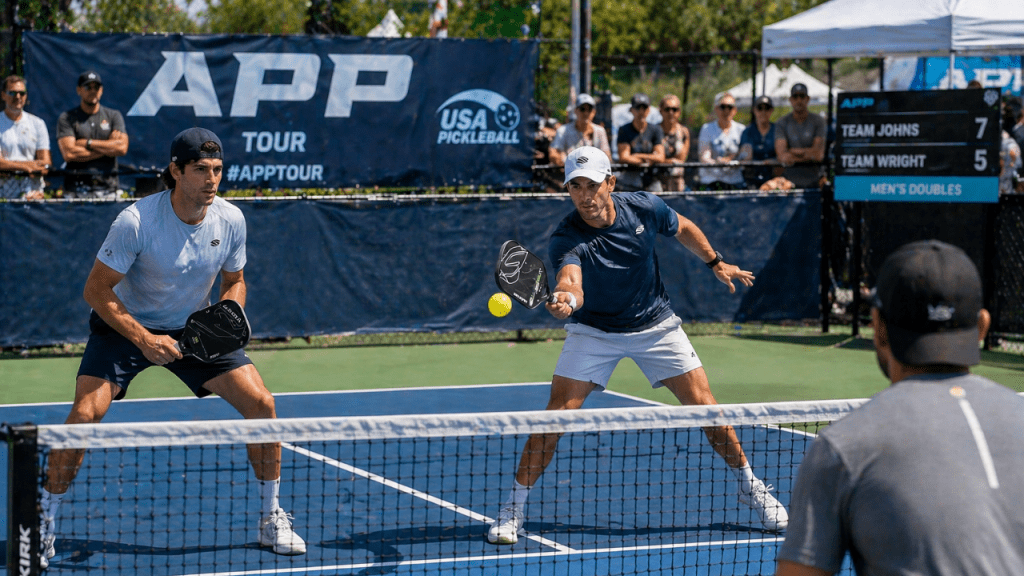
Key Differences Between Forehand and Backhand
1. Power
Forehands generally create more pace because the swing path feels more natural and uses larger body rotation.
2. Speed of Preparation
Backhands often require less backswing, making them faster in close quarters.
3. Reach
Forehands typically offer more comfortable extension on wide balls.
4. Stability
Backhands can be more stable for blocks and resets because the motion stays compact.
5. Spin Potential
Both can create spin, but many recreational players generate topspin more easily on forehands.
When to Use Forehand in Pickleball
Knowing when to use a forehand in pickleball can add immediate consistency.
Use Your Forehand When:
- You have time to set your feet
- The ball is attackable above net height
- You are driving from the baseline
- You can step around a backhand safely
- You are finishing overheads
Pro Tip
Do not overrun the position just to force a forehand. Many doubles teams lose points because both players chase the same middle ball.
Good communication matters as much as mechanics.
When to Use Backhand in Pickleball
Many rallies are won simply by choosing the backhand at the right time.
Use Your Backhand When:
- The ball comes quickly to your body
- You are in a kitchen hand battle
- You need a quick block or reset
- The ball is on your non-dominant side
- You need a compact cross-court dink
Pro Tip
Elite players often trust the backhand volley more than recreational players expect.
Why? Less swing means fewer timing errors.
Pickleball Forehand Technique
Strong technique creates repeatable results.
Forehand Fundamentals
- Ready position with paddle up
- Turn shoulders early
- Use a short backswing on fastballs
- Contact in front of the body
- Transfer weight forward
- Finish balanced
Common Mistakes
- Overswinging
- Hitting late
- Leaning backward
- Dropping the paddle below the waist too early
If you struggle with mechanics, fixing common errors can speed improvement more than buying new gear.
Pickleball Backhand Technique
The backhand should feel compact, controlled, and efficient.
Backhand Fundamentals
- Paddle up in a ready stance
- Minimal backswing
- Use a shoulder turn
- Contact in front of the body
- Stable wrist
- Short clean follow-through
Common Mistakes
- Reaching too far behind the body
- Flicking the wrist excessively
- Taking the paddle too far back
- Standing too upright during volleys
Backhand reliability becomes especially valuable during kitchen exchanges. Our blog on kitchen line footwork and positioning explains how stance and balance support those shots.
Forehand vs Backhand in Doubles
Doubles strategy changes everything.
Middle Balls
Many teams use this rule:
- Forehand takes middle when possible
- But only if it does not break the court balance
Why It Matters
Forehands often attack more aggressively, but forcing every middle ball creates confusion.
Smart Doubles Players
- Call balls early
- Move together
- Respect assigned zones
- Use the most efficient shot, not ego
Forehand vs Backhand in Singles
Singles gives you more space but more court to cover.
Forehand Importance in Singles
- Passing shots
- Runaround attacks
- Deep drives
- Angle creation
Backhand Importance in Singles
- Stretch defense
- Returning wide serves
- Quick counters
- Neutralizing pressure
Because movement matters more in singles, paddle choice and endurance matter too. Lightweight, durable gear can help players move freely throughout long matches.
Best Drills to Improve Both Sides
1. Alternate Feed Drill
Hit one forehand, one backhand repeatedly.
2. Crosscourt Dink Drill
Use forehand crosscourt, then switch to the backhand side.
3. Volley Reaction Drill
Stand at the kitchen line and exchange quick volleys.
4. Step Around Decision Drill
Coach feeds middle balls. Decide whether forehand or backhand is smarter.
5. Baseline Transition Drill
Drive, drop, move forward, volley.
Equipment Matters More Than Many Players Realize
Even great mechanics can be limited by poor equipment.
A paddle that feels balanced, responsive, and comfortable in hand makes both forehands and backhands easier to repeat. Grip comfort, face feel, and maneuverability all influence shot confidence.
At Evolute Pickleball, we focus on performance with responsibility. Our mission includes sustainable innovation, helping players enjoy the sport with gear designed for modern play and a greener future.
You can also explore how sustainability is shaping equipment through our blog on the recycled plastic paddle journey.
Pro Tips for Smarter Shot Selection
Choose Forehand When:
- You have time
- You can attack
- You can maintain balance
Choose Backhand When:
- Speed matters
- Space is tight
- Defense is needed
- The ball jams your body
Choose Either When:
- You are balanced and prepared
- Court positioning allows options
The real edge is not power. It is choosing quickly and correctly.
What This Means for Your Game
Mastering Forehand vs Backhand in Pickleball is not about picking one side over the other. It is about understanding how each shot solves a different problem.
Forehands often bring offense. Backhands often bring efficiency. Together, they create a complete game.
Players who improve both sides become harder to attack, more versatile in rallies, and more confident under pressure.
If you are ready to elevate your performance, explore Evolute Pickleball’s eco-conscious gear built for players who want smarter play and a better future for the sport.
Frequently Asked Questions (FAQs)
What is a forehand in pickleball?
A forehand in pickleball is a shot hit from your dominant side. Right-handed players hit forehands on the right side, while left-handed players hit them on the left side.
What is a backhand in pickleball?
A backhand is a shot hit from your non-dominant side. It is commonly used for quick reactions, blocks, dinks, and defensive shots.
Which is better in pickleball, forehand or backhand?
Neither is always better. Forehands often generate more power, while backhands are excellent for control, fast exchanges, and compact defensive play.
When should I use a forehand in pickleball?
Use a forehand when you have time to prepare, want to attack, or can maintain good court balance while striking the ball.
When should I use a backhand in pickleball?
Use a backhand when the ball comes quickly to your body, reaches your non-dominant side, or when you need a fast defensive response.
How can I improve my pickleball backhand?
Practice compact swings, keep the paddle up in ready position, contact the ball in front of your body, and build consistency through dink and volley drills.
Why is shot selection important in pickleball?
Good shot selection helps you stay balanced, reduce errors, and choose the most efficient forehand or backhand based on court position and rally speed.