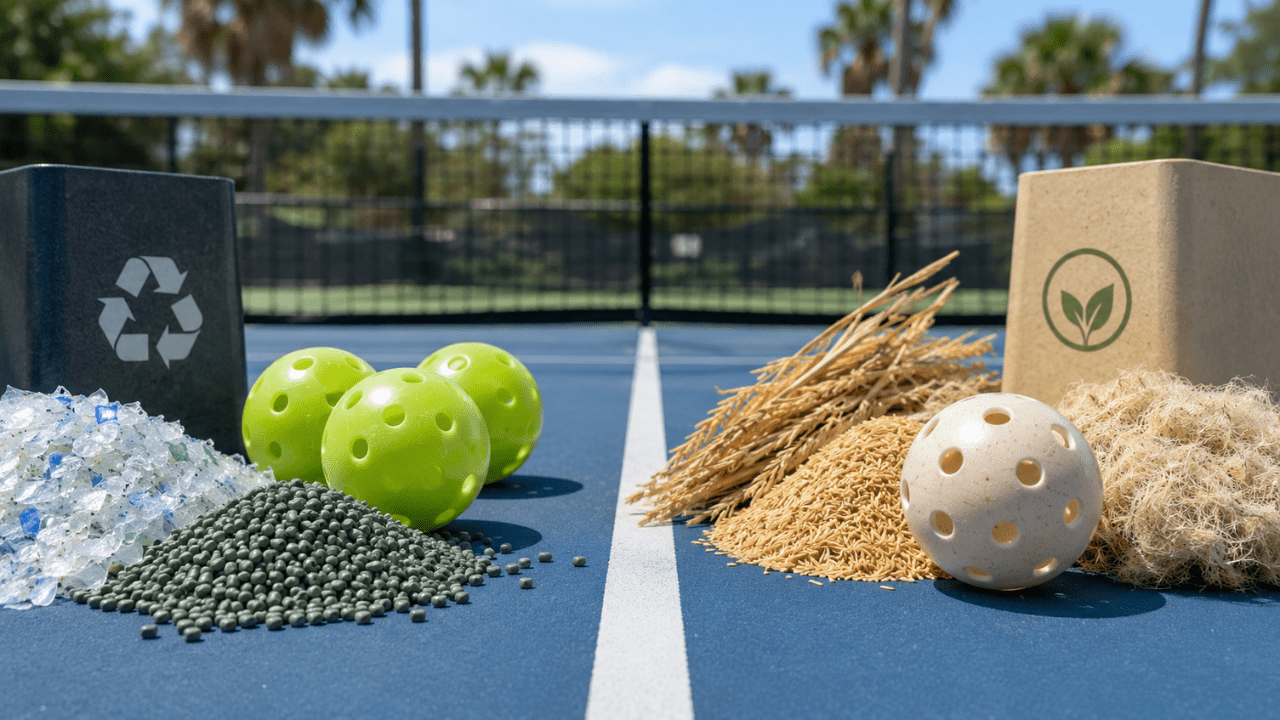
The short answer: a recyclable pickleball is designed to be collected and reprocessed into a new plastic product at the end of its life, while a biodegradable pickleball is designed to break down naturally through microbial activity. Recyclability is about reusing the material; biodegradability is about the material disappearing. The two are not interchangeable, and a single ball is rarely both in a meaningful, real-world way.
There is a bigger point behind both labels: they only matter if the right end-of-life system actually exists. A recyclable ball only helps the planet if it truly gets recycled, and a biodegradable ball only breaks down under the right conditions. As the U.S. EPA explains, “biodegradable,” “compostable,” and “recyclable” are separate ideas that are easy to confuse.
What Does “Recyclable” Mean for a Pickleball?
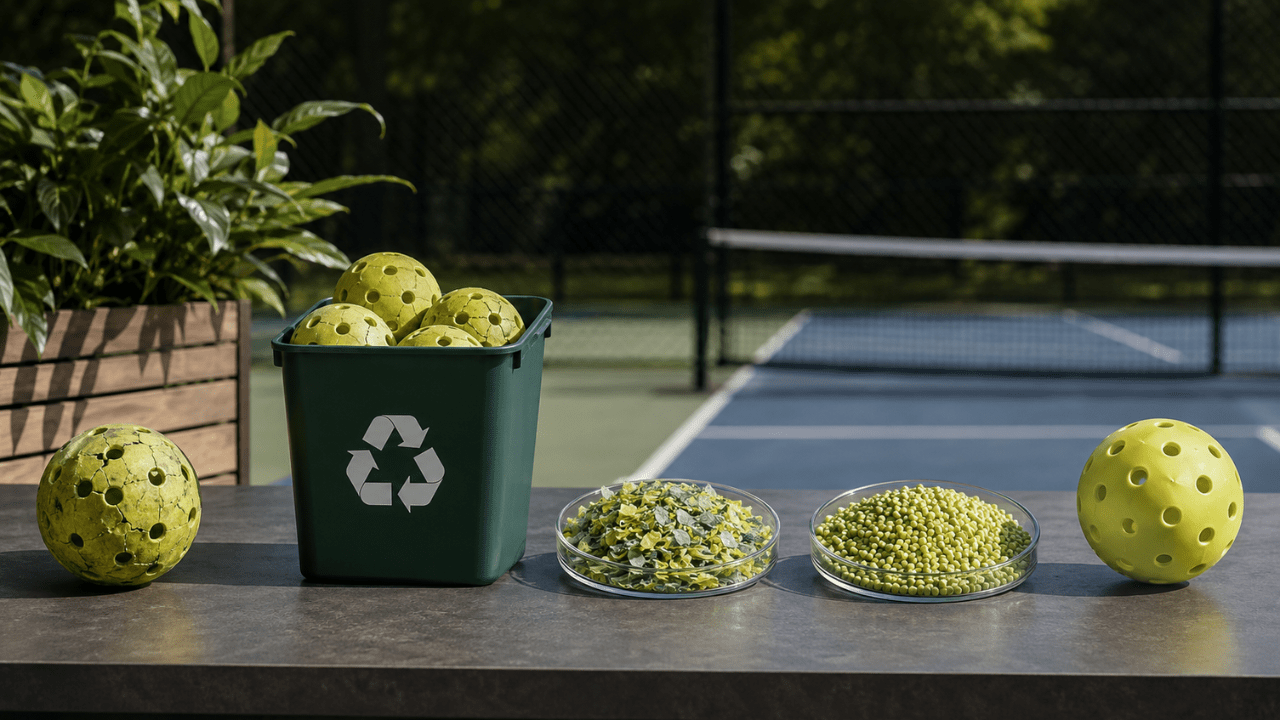
Recyclable means the material can be collected, sorted, cleaned, and reprocessed into new products. Most pickleballs are molded from hard polyolefin plastics like polyethylene and polypropylene, the same family of plastics covered in our guide to what pickleballs are made of, and those are technically recyclable resins.
The problem is practical, not chemical. Pickleballs are small, hollow, and perforated, and they usually carry no resin identification code, so curbside systems often reject them; they can slip through conveyor belts or jam sorting equipment. We cover this in depth in our guide to pickleball recycling challenges and sustainable solutions.
So a standard pickleball is usually “recyclable in theory” but not through your household bin. It becomes genuinely recyclable when it is both made from a recyclable polymer and given a real path to be recycled, such as a dedicated take-back or collection program. Our article on how to recycle pickleballs walks through those options.
What Does “Biodegradable” Mean (and Is It the Same as Compostable)?
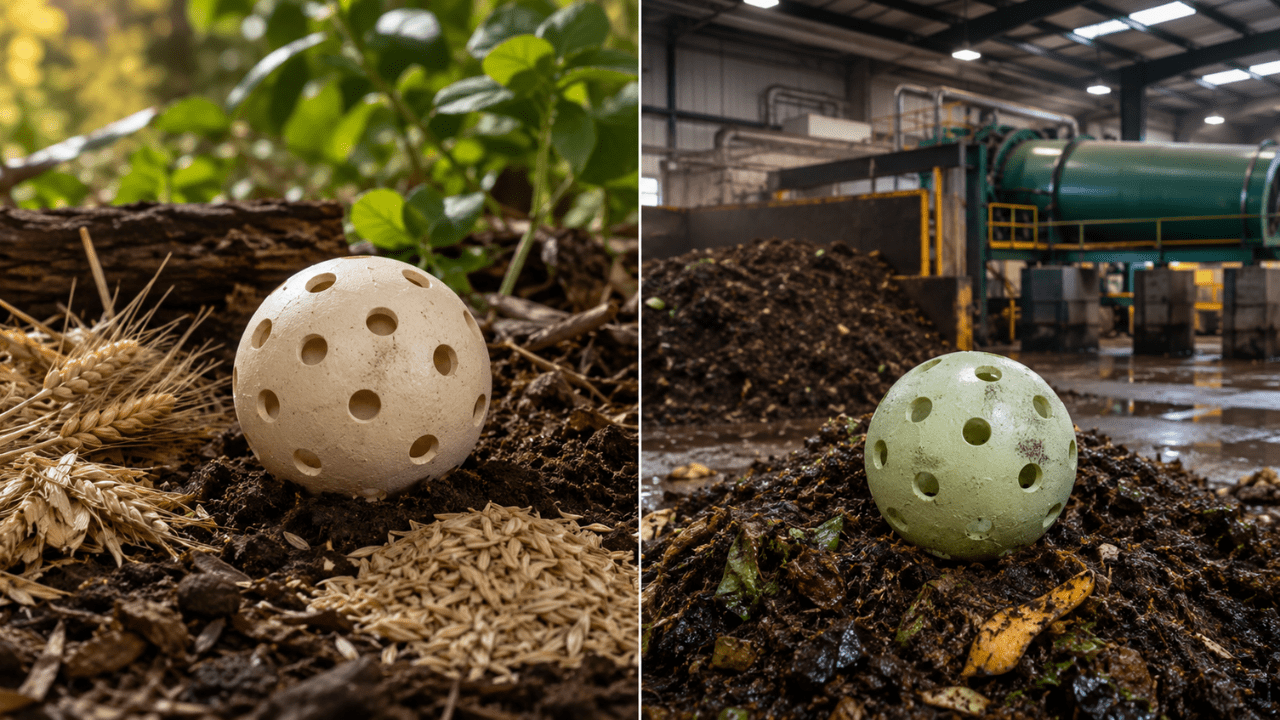
Biodegradable means a material can be broken down by microorganisms into natural substances such as water, carbon dioxide, and biomass. But the word is loose on its own: it says nothing about how long that takes or what conditions are required.
Biodegradable
Under the U.S. FTC Green Guides, an unqualified “biodegradable” claim should mean the entire item completely breaks down and returns to nature within a reasonably short period — about one year after customary disposal. For a product that typically ends up in a landfill, that is a high bar most plastics simply cannot meet, which is why the label is so often misleading.
Compostable
Compostable is a stricter and more useful term. A compostable pickleball breaks down into compost under defined conditions, usually inside an industrial composting facility with high heat and moisture, not a backyard bin. Standards such as ASTM D6400 define what can legally be marketed as “compostable” in states like California.
The key distinction, per the EPA: compostable materials are biodegradable, but not all biodegradable materials are compostable, and neither one is the same as recyclable. “Biodegradable” with no stated conditions is close to meaningless.
Recyclable vs Biodegradable Pickleballs, Side by Side
The two labels differ in what they target: recyclable reuses the plastic, while biodegradable removes it. They also differ in material: recyclable balls use durable polymers such as recycled plastic or recyclable TPE, whereas biodegradable and compostable balls use bio-based inputs like wheat straw and rice husk.
End of life is different too. A recyclable ball needs collection plus a facility that will accept it; a biodegradable or compostable ball needs the right breakdown or composting conditions. And on performance, recyclable balls can match standard play today, while bio-based balls are improving but often fall short on durability and bounce.
Are Pickleballs Actually Recyclable or Biodegradable Today?
Recyclable pickleballs are real and available right now. Balls made from recycled plastic, including recycled ocean-bound plastic or from recyclable polymers like TPE, keep the performance players expect while reducing waste.
Biodegradable and compostable pickleballs also exist, using plant-based materials such as wheat straw and rice husk. A few are marketed as tournament-ready, but most bio-based balls do not yet match the durability, bounce, and consistency competitive play demands, so they remain a niche option for now. One of the simplest ways to cut waste in the meantime is to make balls last longer, as we explain in our guide on how long pickleballs last.
The Greenwashing Trap: Why Green Labels Can Mislead
Because “biodegradable” and “eco-friendly” are not tightly regulated words, they are easy to over-use. A ball labeled biodegradable can still sit in a landfill for years if it never reaches composting conditions. The FTC Green Guides exist to curb exactly these vague or unqualified claims. Before you trust a label, look for specifics: what breaks the ball down, under what conditions, how long it takes, and whether it meets a recognized standard such as ASTM D6400.
Which Is the More Sustainable Choice Right Now?
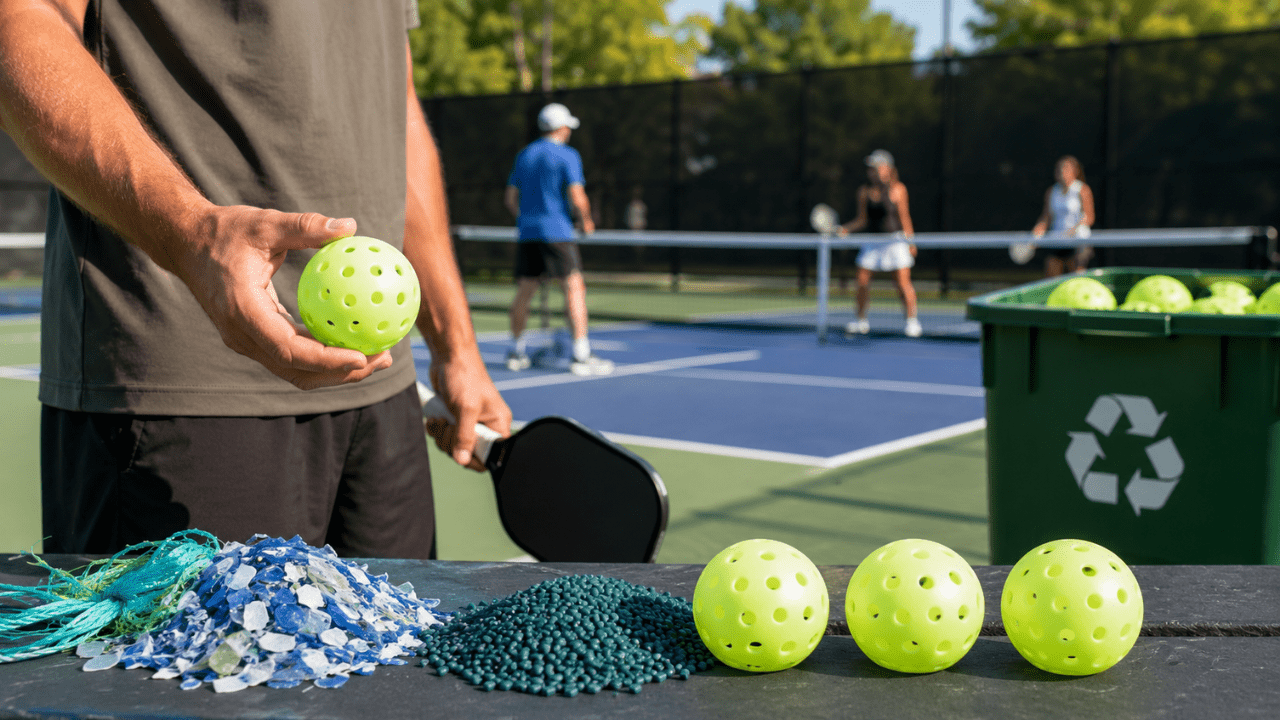
For most players today, a recycled and recyclable ball is the most practical sustainable choice. It delivers reliable, tournament-legal performance; balls still have to meet USA Pickleball’s approved equipment standards, and it has a realistic end-of-life path. Biodegradable and compostable balls are promising for the future, but they are still catching up on durability and depend on composting infrastructure most players cannot access.
The most sustainable habit of all is simple: choose durable balls, make them last, and dispose of them responsibly. Our article on the importance of recycling pickleballs explains why that mindset matters as the sport grows.
How Evolute Pickleball Approaches Sustainability
At Evolute Pickleball, the goal is performance without unnecessary waste. Our USA-approved recycled pickleballs are built with recycled ocean-bound plastic and designed to be fully recyclable, so players get consistency on the court without ignoring the environmental impact of the game.
You can read more about our material philosophy in our guide to the rise of sustainable pickleball design.
Key Takeaways
Recyclable and biodegradable are not the same: recyclable reuses the plastic, while biodegradable breaks it down.
“Biodegradable” is a vague term; compostable is stricter and usually requires industrial composting under standards like ASTM D6400.
Not all biodegradable materials are compostable, and neither one is the same as recyclable.
Most standard pickleballs are technically recyclable but are rejected by curbside systems, so they need take-back or collection programs.
Biodegradable and compostable pickleballs exist, but most still fall short of competitive durability and performance.
Recycled, recyclable balls are currently the most practical way to play sustainably without sacrificing performance.