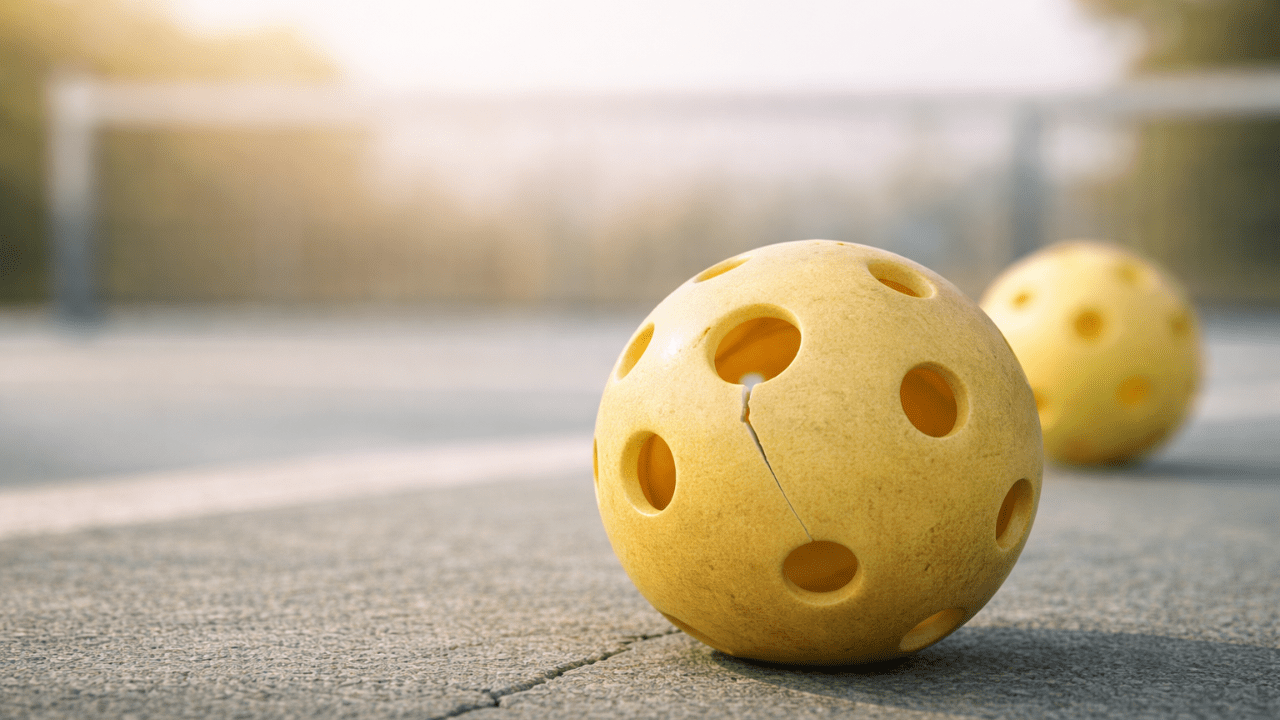
Pickleball is growing at a pace few sports have ever seen. Courts are full, new players are entering daily, and competitive play is getting faster and more aggressive.
But there is a downside most players notice quickly. Pickleballs do not last long.
Clubs go through hundreds or even thousands of balls annually. Casual players still find themselves replacing balls far more often than expected. What seems like a small purchase becomes a recurring cost and, more importantly, a growing plastic waste issue.
So the real question is not just performance.
How long do pickleballs actually last, and what does that mean for durability, cost, and sustainability?
How Long Do Pickleballs Last? (Quick Answer)
Here is the clear, snippet-ready answer:
- Recreational play: Outdoor balls last about 3 to 10 games. Indoor balls last about 10 to 30 games.
- Competitive or power-heavy play: Balls may last only 1 to 3 games, especially outdoors.
- Indoor vs outdoor: Indoor pickleballs last longer due to smoother surfaces and stable conditions. Outdoor balls degrade faster due to rough courts and weather exposure.
These are realistic ranges. Premium balls can last longer, but cold weather and aggressive play can shorten their lifespan significantly.
What Is the Average Pickleball Lifespan?
There is no single lifespan number because pickleballs fail in two different ways:
- Performance lifespan: The ball still looks fine, but loses bounce, shape, or flight consistency.
- Structural lifespan: The ball cracks and becomes unusable immediately.
Most players experience performance decline before visible failure. That is why balls are often replaced before they break.
In controlled conditions, pickleballs are tested for bounce, weight, and size. In real-world play, conditions are far harsher. Surface texture, temperature, and intensity all reduce actual lifespan compared to lab expectations.
How Long Do Outdoor Pickleballs Last?
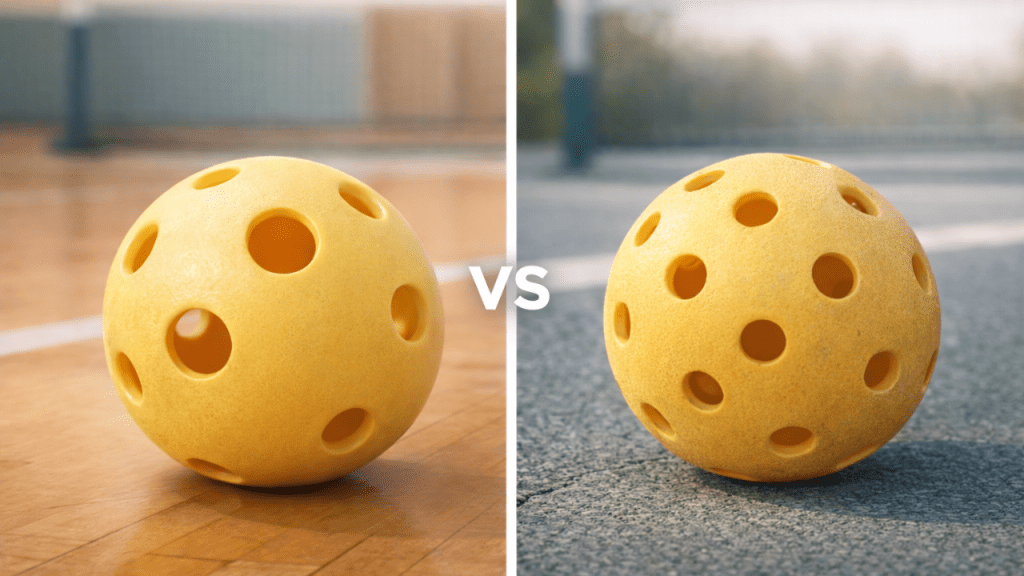
Outdoor pickleballs are built for durability but face the harshest conditions.
They are made with harder plastic and have smaller holes to handle wind and maintain flight stability. But these same characteristics make them more prone to cracking under stress.
Typical lifespan:
- Around 3 to 10 games in normal conditions
- Often 1 to 3 games in competitive or aggressive play
- Shorter lifespan in cold temperatures or on rough courts
Rough surfaces increase abrasion. Cold weather makes plastic brittle. Combined, these factors accelerate failure.
How Long Do Indoor Pickleballs Last?
Indoor pickleballs are designed for control and consistency.
They use softer materials and have larger holes, which reduces stress during impact. They are also played on smooth indoor courts with stable temperatures.
Typical lifespan:
- Around 6 to 10 matches in intensive play
- Up to 15 matches or more in casual settings
Indoor balls rarely crack as quickly as outdoor ones. Instead, they gradually lose bounce or become slightly deformed.
What Affects Pickleball Lifespan?
- Playing Surface
Surface is one of the biggest durability drivers.
- Outdoor courts increase wear and impact stress
- Indoor courts are smoother and reduce damage
- Temperature
Temperature directly changes material behavior.
- Cold conditions increase brittleness and cracking
- Heat softens the ball and affects shape and bounce
- Playing Intensity
Hard hitters break balls faster.
Powerful shots increase impact stress and accelerate fatigue. Competitive play significantly reduces lifespan compared to recreational play.
- Ball Quality
Not all balls are built the same.
Material choice, wall thickness, and manufacturing methods influence how long a ball maintains performance.
Why Do Pickleballs Crack?
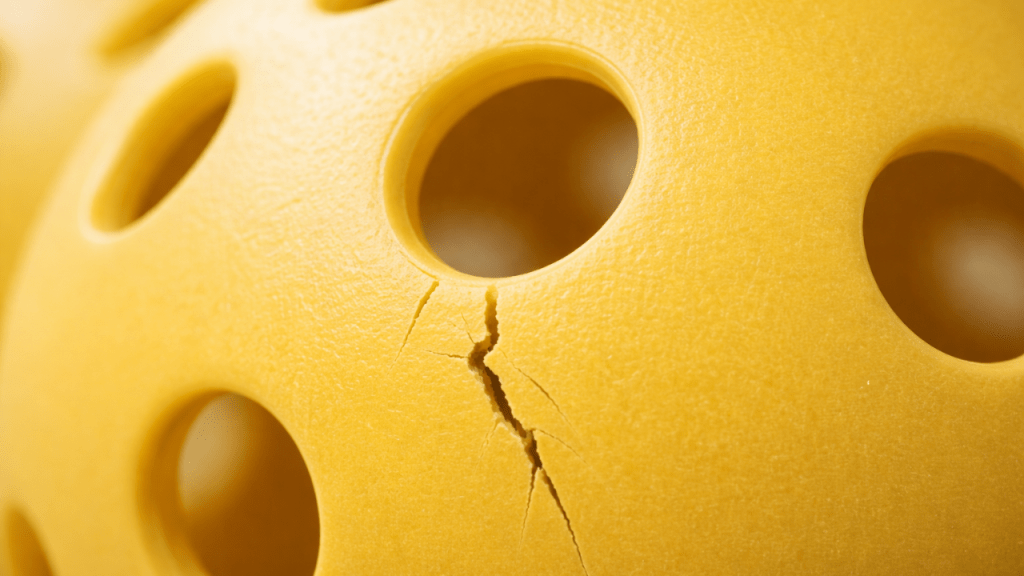
Cracking is not random. It is a predictable result of design and physics.
First, the holes in a pickleball create stress concentration points. These areas experience higher stress during impact.
Second, repeated hits cause material fatigue. Small microcracks form over time and grow with each impact.
Third, temperature plays a major role. In cold conditions, plastic becomes brittle and absorbs less energy, leading to faster crack formation.
Finally, design matters. Hole shape, spacing, and edge finishing can influence how stress is distributed across the ball.
In simple terms, pickleballs fail because they are repeatedly stressed at their weakest points.
Signs You Should Replace a Pickleball
Replace the ball if you notice:
- Visible cracks or splits
- Reduced or uneven bounce
- Out-of-round shape
- Inconsistent or wobbling flight
- Softer feel or dull sound
Waiting too long affects gameplay quality and fairness.
How Often Should You Replace Pickleballs?
This depends on how you play.
- Competitive players: Replace every 1 to 3 games if performance drops
- Regular club play: Replace outdoor balls every few sessions, indoor balls less frequently
- Cold weather play: Expect faster replacement cycles
If you are asking when you should replace pickleballs, the rule is simple. Replace as soon as the ball stops behaving consistently.
How to Make Pickleballs Last Longer
You cannot eliminate wear, but you can extend lifespan.
- Store balls indoors away from extreme temperatures
- Rotate balls during play instead of using one continuously
- Use the correct ball type for indoor or outdoor conditions
- Avoid leaving balls in cars or direct sunlight
- Stick to consistent ball models to reduce perceived inconsistency
Small changes can significantly improve usable life.
Pickleball Recycling and Waste
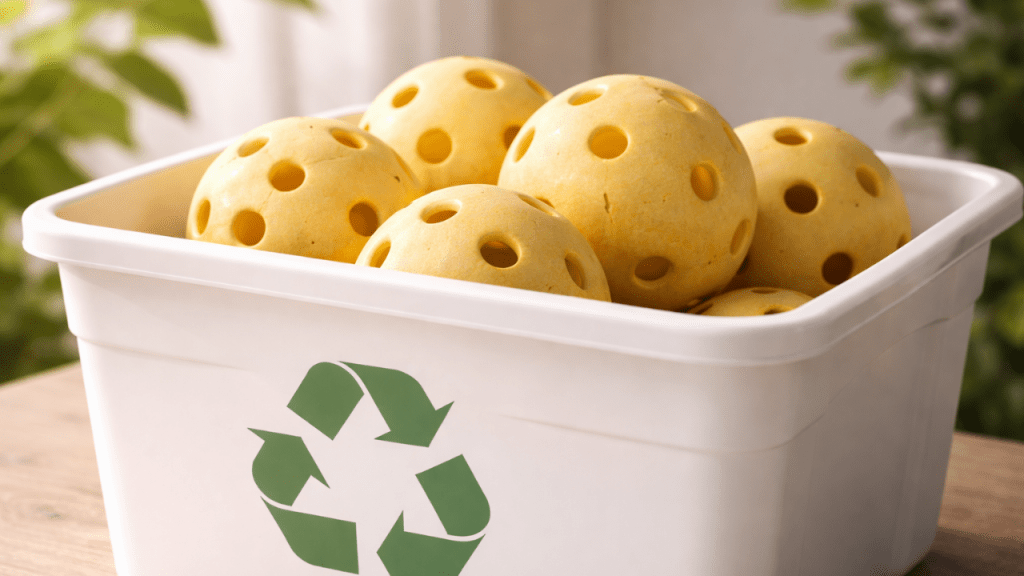
Pickleballs have a short lifespan, which creates a growing waste problem.
Most balls are made from plastic materials like polyethylene or polypropylene. While technically recyclable, they rarely get processed through standard recycling systems.
The problem is size and sorting.
Small plastic items often fall through sorting equipment in recycling facilities. Many curbside programs reject sports balls entirely.
As a result, most used pickleballs end up in landfills.
Some solutions are emerging:
- Specialized recycling programs and collection bins
- Mail-in recycling services for hard-to-process plastics
- Community-level initiatives to collect and repurpose balls
However, these solutions are still limited and not widely accessible.
Industry Shift Toward Better Durability
Durability and sustainability are becoming central to product design.
Manufacturers are experimenting with improved materials, better hole designs, and more consistent construction methods to reduce cracking and extend performance life.
At the same time, there is increasing attention on environmental impact.
As durability and sustainability become more important, some manufacturers are focusing on improving both performance consistency and material responsibility.
Evolute Pickleball reflects this shift by developing high-performance pickleballs like the EV-11, engineered for durability, consistent play, and sustainability. Manufactured using 10% reclaimed ocean-bound plastic and designed to be 100% recyclable, these balls reduce plastic waste while maintaining elite-level performance standards.
Key Takeaways
- Pickleball’s lifespan is short and measured in games, not months
- Outdoor pickleballs last 3 to 10 games on average
- Indoor pickleballs last longer due to controlled conditions
- Cracking happens due to stress concentration, fatigue, and temperature
- Replacement depends on performance, not just visible damage
- Recycling options exist, but are still limited
Frequently Asked Questions (FAQs)
How long do pickleballs last outdoors?
How long do pickleballs last indoors?
Why do pickleballs crack so fast?
When should you replace pickleballs?
Are pickleballs recyclable?