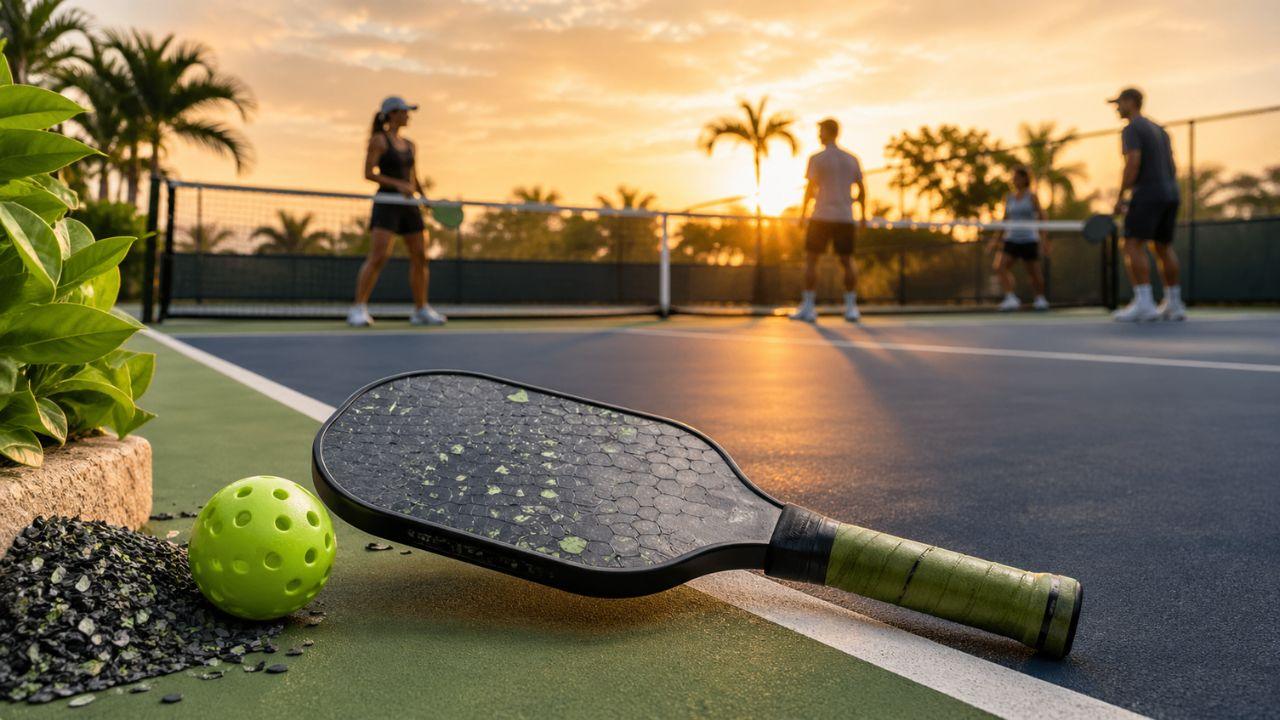
Pickleball is growing fast, and so is the amount of equipment used to support it. From balls and paddles to accessories and packaging, the sport is creating more demand than ever. But with that growth comes an important question: what happens to all that gear over time?
This is where sustainable pickleball design is starting to reshape the industry. Players are no longer just looking for performance. They are also looking for smarter materials, longer-lasting gear, and more responsible choices.
Why Sustainable Pickleball Design Matters
Pickleball equipment is built for durability, but most of it is not built for disposal. As participation increases, so does equipment waste.
Consider this:
- Pickleballs crack and are often discarded
- Paddles wear out and are rarely recyclable
- Packaging contributes to environmental impact
Unlike common plastics, most pickleball gear is made from mixed materials, making it difficult to process through standard recycling systems.
That is why sustainability in pickleball is shifting toward design-first thinking, where waste reduction starts at the material and manufacturing level.
How Sustainable Design Looks in Practice
At Evolute Pickleball, sustainability is approached as a design problem, not a marketing claim. The focus is on building products that maintain high performance while reducing environmental impact.
EV11 pickleballs are engineered to meet USAPA standards for bounce, weight, and durability, ensuring consistent play across all levels. At the same time, material choices are evolving.
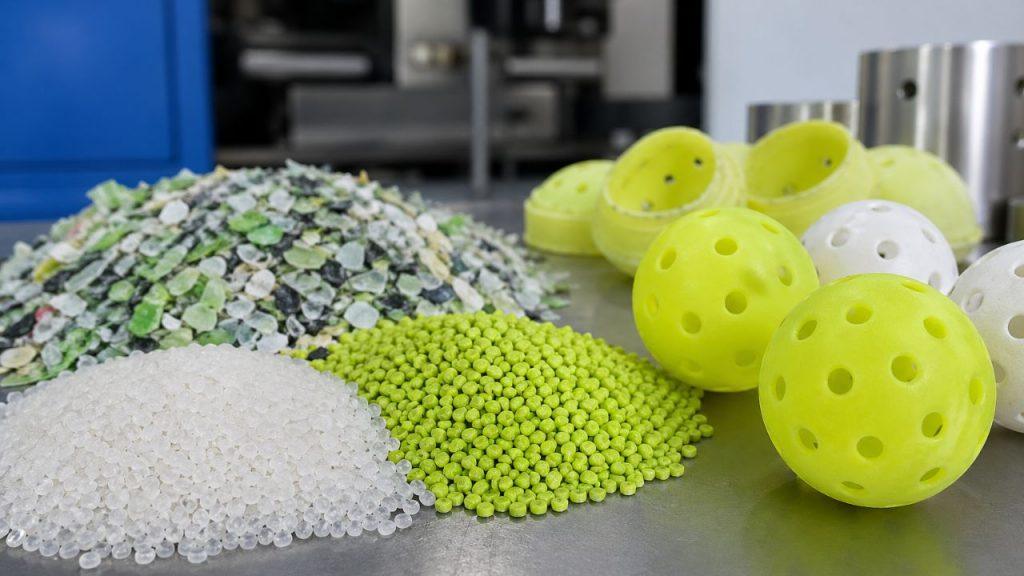
Each ball incorporates 10% reclaimed ocean-bound plastic and is made from #2 MDPE, a fully recyclable material, helping reduce plastic waste while maintaining reliability on the court.
Production is also structured more efficiently. Products are designed in Beaver, Pennsylvania, and manufactured in Central America, supporting regional jobs while reducing the environmental impact associated with long-distance shipping.
The goal is not just to create eco-friendly pickleball gear, but to design equipment that lasts longer, performs consistently, and contributes to a more sustainable future for the sport.
The Role of Materials in Sustainable Pickleballs
The biggest shift in the industry is happening at the material level. Sustainable pickleball design focuses on the materials used and how efficiently they are produced.
Recycled Pickleballs Materials
Manufacturers are exploring:
- Reclaimed plastic integration
- Reduced virgin plastic usage
- Material optimization for durability
These changes allow brands to maintain performance while reducing environmental impact.
To see how materials and construction have evolved, explore our guide on the evolution of pickleballs from plastic toys to high-performance gear, which breaks down key advancements in design and durability.
Sustainable Pickleball Paddles
Paddles are another area where sustainability is evolving.
Traditional paddles use layered composites and adhesives that are difficult to recycle. New approaches focus on:
- Improving lifespan
- Reducing material waste
- Exploring eco-conscious construction methods
The goal is not just to create a sustainable pickleball paddle, but one that performs consistently across all levels of play.
To understand how recycled materials are actually used in paddle manufacturing, explore our detailed breakdown of how plastic waste is transformed into high-performance paddles.
Eco-Friendly Pickleball Gear
Sustainability extends beyond the product itself. It includes:
- Packaging design
- Manufacturing efficiency
- Product lifecycle
Eco-friendly pickleball gear focuses on minimizing environmental impact at every stage, from production to disposal.

Performance vs Sustainability: No Longer a Trade-Off
There was a time when sustainability meant compromising on performance. That is no longer the case.
Modern players expect:
- Consistent bounce
- Reliable durability
- Precision control
Sustainable design now works alongside performance, not against it. In many cases, better materials actually improve product longevity and consistency.
If you want to understand how durability impacts performance and replacement frequency, read our guide on how long pickleballs last and what affects their lifespan.
Smarter Play Starts With Smarter Design
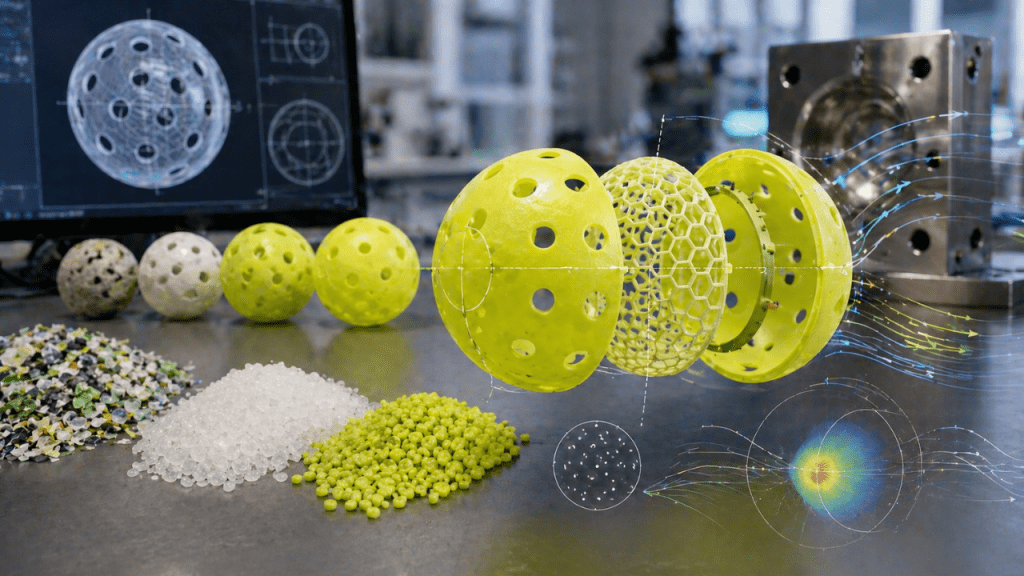
Sustainable pickleball design is not just about materials. It also influences how the game is played.
Better-designed gear leads to:
- More consistent performance
- Fewer replacements
- Greater long-term value
When equipment lasts longer and performs reliably, players can focus more on strategy and less on constant replacements.
What Players Can Do Today
Sustainability is not just a manufacturer’s responsibility. Players play a role, too.
Simple steps include:
- Use the equipment longer instead of replacing it quickly
- Repurpose used pickleballs whenever possible
- Choose gear made with recycled or optimized materials
- Support brands focused on sustainability
Even small changes can create a meaningful impact when adopted across the community.
If you’re looking for practical ways to reduce waste, explore our guide on how to recycle pickleballs in 2026, including reuse ideas and real-world solutions players can apply today.
The Future of Sustainable Pickleball Design
The future is moving toward:
- Increased use of recycled pickleball materials
- Longer-lasting equipment
- More efficient production processes
- Innovation in recyclable and biodegradable materials
While fully recyclable pickleballs are still evolving, the direction is clear. The industry is shifting toward smarter, more responsible design.
The Future of Smarter, Sustainable Pickleball
Pickleball is evolving, not just expanding.
Sustainable pickleball design is driving that shift through better materials, longer-lasting gear, and more efficient production. As the sport grows, reducing waste and improving product lifecycle is becoming essential, not optional.
Players today expect more than performance. They want equipment that reflects how they play and what they value.
At Evolute Pickleball, we approach this by combining performance standards with smarter material choices. From integrating reclaimed plastic into product design to focusing on durability and recyclability, the goal is to reduce environmental impact without compromising how the game is played.
Because the next phase of pickleball is not just about growth. It is about smarter, more sustainable growth.
Frequently Asked Questions (FAQs)
Why is sustainability important in pickleball?
As pickleball continues to grow, so does equipment usage and waste. Sustainability helps reduce environmental impact, conserve resources, and ensure the sport can grow responsibly over time.
What is sustainable pickleball design?
Sustainable pickleball design focuses on reducing environmental impact through:
- Recycled or optimized materials
- Longer product lifespan
- Efficient manufacturing processes
- Reduced packaging waste
It aims to balance performance with responsibility.
How does Evolute Pickleball support sustainable design?
At Evolute Pickleball, sustainability is integrated into product design through material selection, durability, and manufacturing strategy. EV pickleballs are made with 10% reclaimed ocean-bound plastic and use recyclable #2 MDPE materials. Products are designed to meet USAPA performance standards while reducing environmental impact and supporting more efficient regional production.
Are pickleballs recyclable?
Most pickleballs are not recyclable through standard curbside recycling programs. They are made from plastic blends and have a hollow, perforated structure that makes them difficult to process. However, they can still be reused or repurposed in different ways.
How can you recycle pickleballs?
While traditional recycling is limited, you can:
- Repurpose old balls for drills or practice
- Donate them to schools or beginner programs
- Use them for non-competitive play
Some community initiatives also collect used balls for creative reuse.
Do sustainable pickleball products perform as well?
Modern sustainable pickleball products are designed to match or even exceed traditional performance standards. Improvements in material science have made it possible to achieve durability, consistency, and control without compromise.