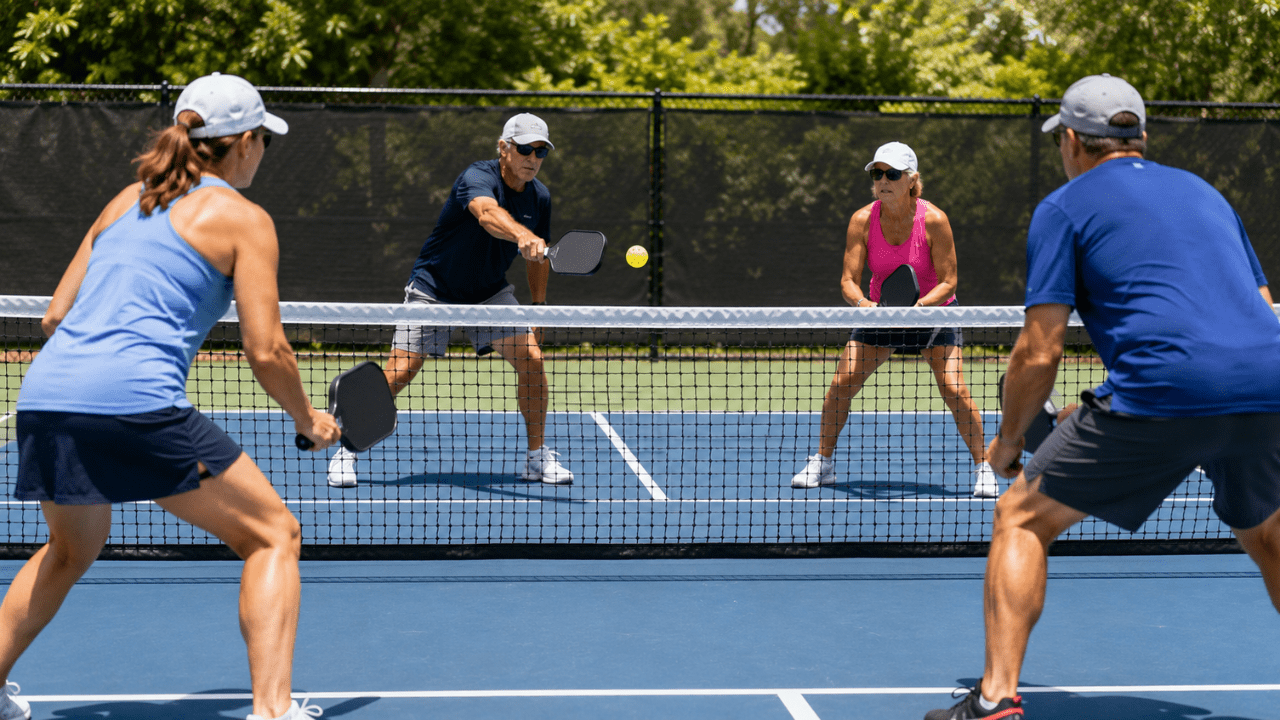
Watch any high-level pickleball match, and you will notice something that surprises most beginners: the best players are not always hitting the hardest. They are hitting the smartest. And the shot at the center of that intelligence is the pickleball dink shot.
The dink is a soft, controlled shot played from the kitchen line that arcs gently over the net and lands inside the opponent’s non-volley zone. It sounds simple. It is anything but. Mastering the dink shot in pickleball is what separates players who win rallies from players who simply survive them.
Most recreational players default to power. They drive. They smash. They try to end points quickly. And most of the time, they lose those points themselves, because a hard-hit ball is easy to defend when your opponent is ready for it. The pickleball kitchen game is built on a different philosophy: patience, placement, and waiting for your opponent to crack. If you want to understand which shots actually win the most points, read our breakdown of the
5 pickleball shots that win the most points. The dink features prominently.
The dink does not exist in isolation either. It is the natural continuation of a well-executed third shot. If you have not yet dialled in your third shot drop, that is a great place to start before building your full kitchen game.
This guide covers everything you need to know about the dink shot in pickleball. From the mechanics of how to hit one correctly to advanced dinking strategies, cross-court angles, drill routines, and the mental patience required to win kitchen battles, you will find it all here.
What Is a Dink Shot in Pickleball?
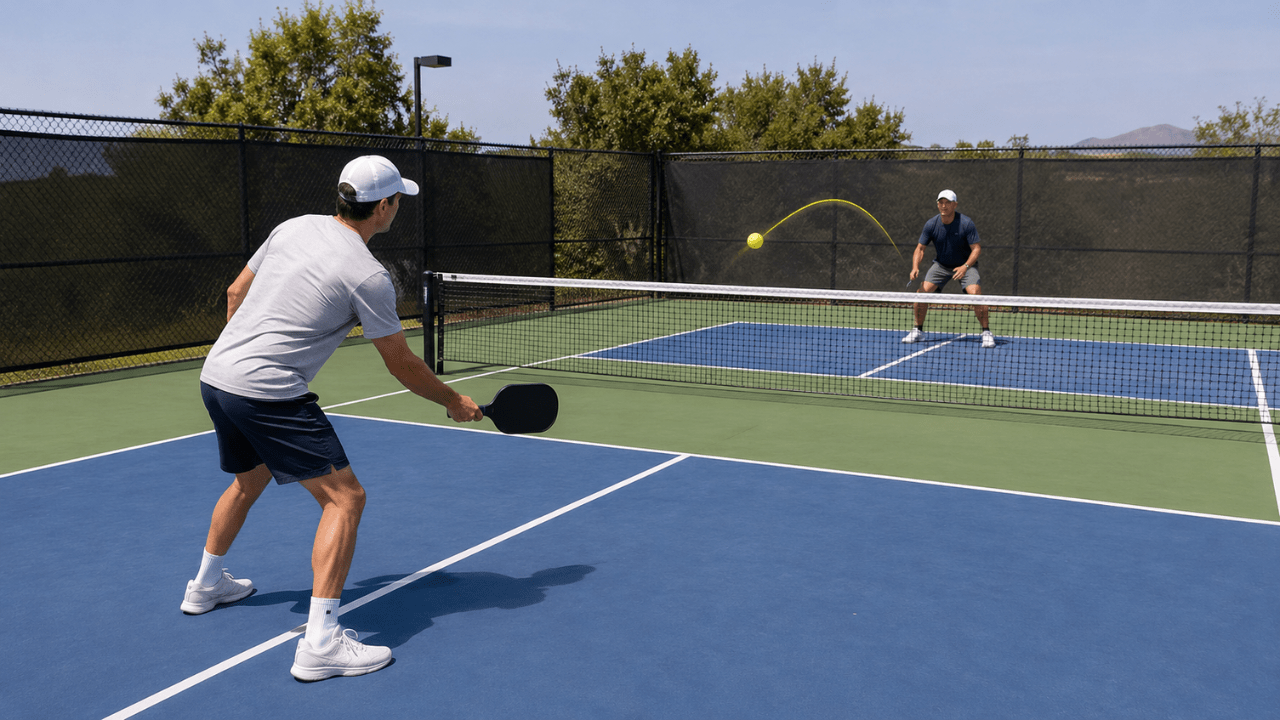
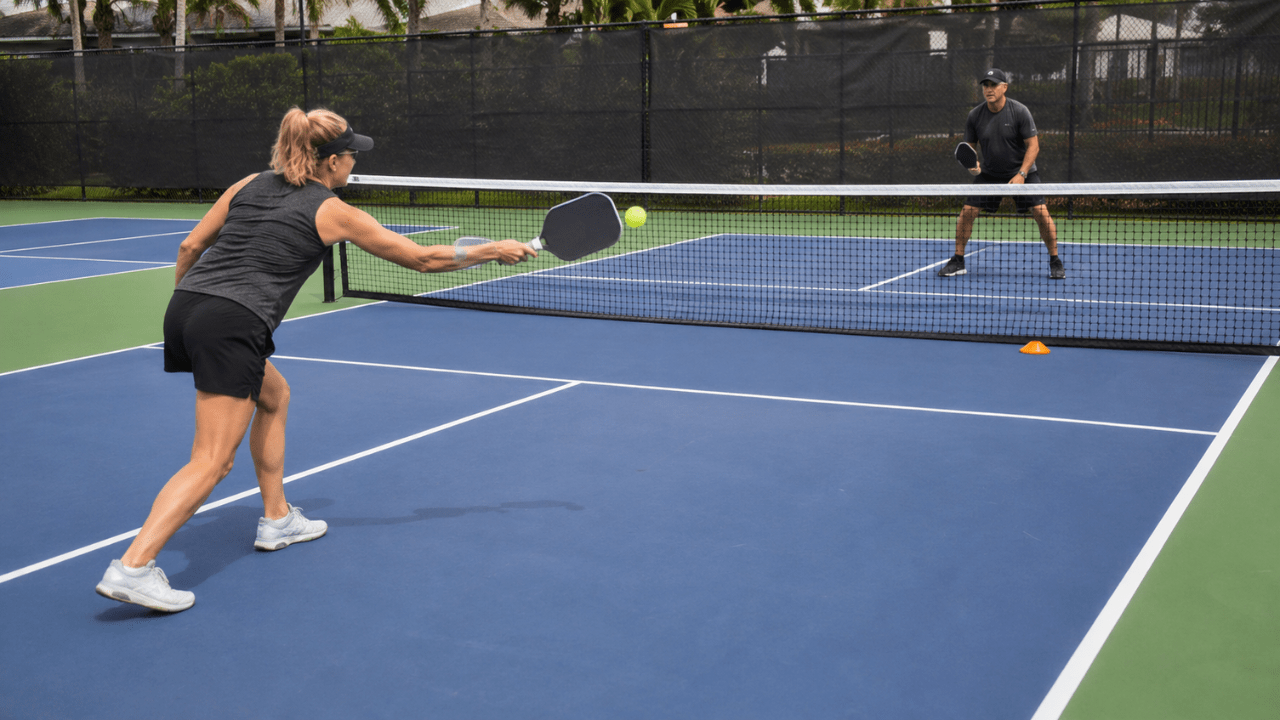
A dink shot in pickleball is a soft, low-trajectory shot hit from near the non-volley zone line that lands in the opponent’s kitchen. The goal is to keep the ball low, force the opponent into an uncomfortable upward contact, and avoid giving them anything they can attack.
Unlike a drive, which is hit with pace and intention to push through the defense, the dink is a patient shot. It is designed to neutralize power, keep the rally going on your terms, and create the opportunity to attack when your opponent makes a mistake.
In competitive pickleball, the dink is not just one tool in your toolbox. It is the foundation of the entire offensive game. Almost every fast-paced exchange in the kitchen starts with a dink rally that one player finally escalates.
Understanding the Non-Volley Zone (The Kitchen)
The non-volley zone, universally called the kitchen, is the 7-foot area on either side of the net where players are not allowed to volley the ball. You can enter the kitchen, but only to hit a ball that has bounced inside it.
This rule fundamentally changes the game. It forces both players to approach the net carefully and prevents either side from dominating with aggressive volleys alone. The result is a zone where soft play, touch, and tactics matter more than raw power.
Controlling the kitchen means controlling the match. When both players are at the kitchen line and dinking consistently, the player who forces a high ball creates the opportunity to attack. Winning the kitchen game is the single most important skill in competitive pickleball.
How to Hit a Dink Shot in Pickleball
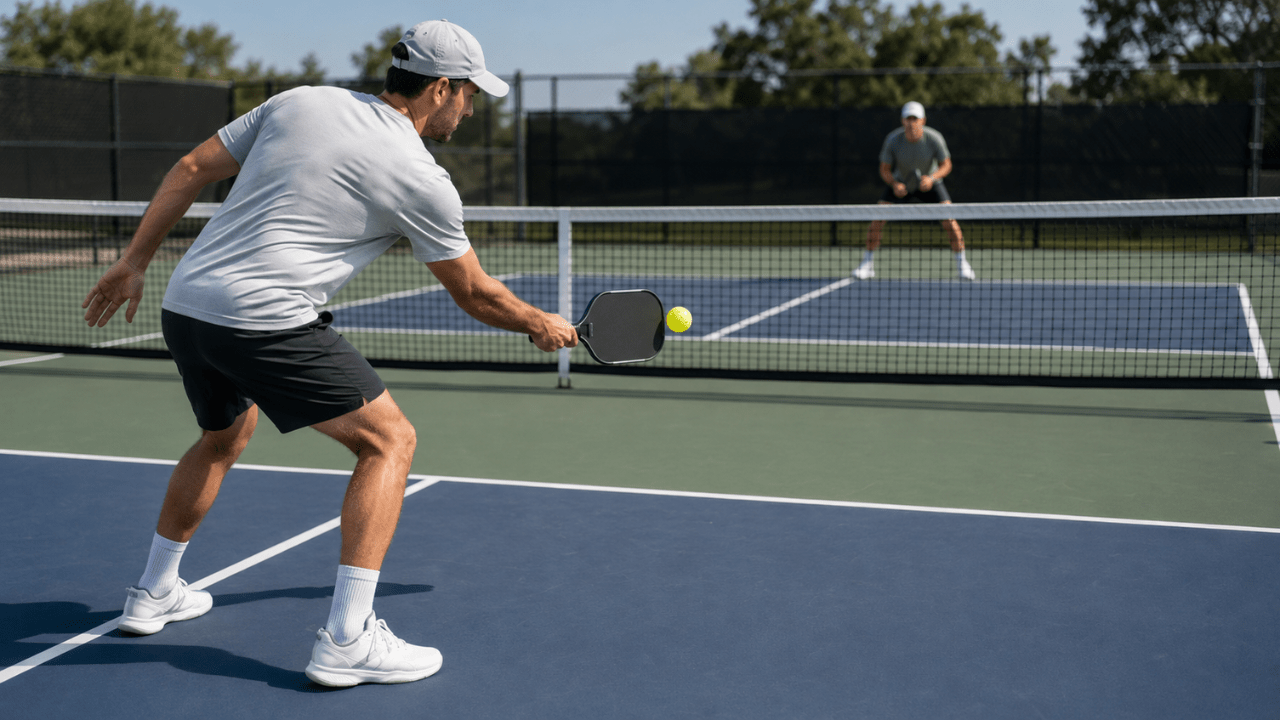
Learning how to hit a dink shot in pickleball correctly from the start will save you months of correcting bad habits. Here is the complete mechanics breakdown.
1. Grip and Paddle Angle
Use a continental or neutral grip. Avoid gripping too tightly. The dink requires feel, and a tight grip eliminates the soft touch you need. Keep your paddle face slightly open (angled slightly upward) at contact to give the ball a gentle lift over the net.
2. Stance and Body Position
Stand close to the kitchen line with your knees slightly bent and your weight forward on the balls of your feet. Keep your paddle in front of your body at all times, not at your side. Your ready position should allow you to reach both forehand and backhand dinks without large movements. For a complete breakdown of how movement wins more points, see our guide on pickleball footwork fundamentals.
3. The Swing: Compact and Controlled
The dink is not a full swing. It is a push with a short, controlled motion. Use your shoulder and elbow to guide the paddle, not your wrist. A wristy dink is unpredictable and difficult to control. Keep the motion compact and your contact point out in front of your body.
4. Contact Point and Arc
Contact the ball below or at the net level whenever possible. The goal is to create a gentle arc that clears the net by only a few inches and then drops sharply into the kitchen. Too high and your opponent can attack. Too low and you hit the net.
5. Follow-Through
Follow through in the direction of your target. A short, controlled follow-through helps with consistency. Do not decelerate at contact. Commit through the shot to avoid dumping it into the net.
6. Common Beginner Mistakes
- Gripping too tightly and losing touch
- Using too much wrist, creating unpredictable results
- Standing too far back from the kitchen line
- Contacting the ball too late (beside the body, not out front)
- Hitting upward too much and popping the ball up for an easy attack
Types of Dink Shots Every Player Should Know
Not all dinks are the same. Understanding the different types gives you more weapons in every kitchen battle.
-
Straight / Down-the-Line Dink
Played directly in front of you to the opponent across the net. Shorter distance, faster exchange. Used to test reaction time and keep the opponent honest.
-
Cross-Court Dink
Played diagonally across the court. The most effective and forgiving dink in the game due to its geometric advantage. We cover this in detail in its own section below.
-
Backhand Dink
Many players have a weaker backhand dink, and opponents will target that side relentlessly. Keep your elbow close to your body and your paddle face stable. For a deeper look at the differences between forehand and backhand mechanics in pickleball, see our guide on forehand vs backhand in pickleball.
-
Reset Dink
Used when you are on defense and need to neutralize an attack or a fast exchange. A reset dink is played softly toward the center of the kitchen to buy time and return the rally to a slow, patient pace.
-
Attacking Dink (Speed-Up)
The attack that originates from a dinking position. When your opponent’s dink pops up above the net, that is your signal to accelerate and drive the ball at them. The attacking dink is most effective when your opponent is settled into a comfortable rhythm and not expecting a sudden change in pace.
Pickleball Dink vs Drive: When to Choose Which
One of the most important decisions in pickleball is choosing between a dink and a drive. Getting this wrong is one of the fastest ways to give away a point. Understanding how pickleball court size influences shot selection gives you additional context for when each shot is most effective.
Dink When:
- Both players are at the kitchen line
- The ball is below net height at contact
- Your opponent is balanced and ready for a hard ball
- You want to extend the rally and wait for a mistake
- You are defending a speed-up and need to reset the point
Drive When:
- You are in the transition zone and need to keep your opponent back
- Your opponent has stepped away from the kitchen line
- The ball is above net height, and you have an aggressive angle
- You need to change the tempo of the rally deliberately
The core rule: if the ball is below the net tape at contact, dink it. If the ball is above the net tape and you have an angle, attack it. Trying to drive a ball that is below the net is one of the fastest ways to lose a rally.
The Cross-Court Dink: Your Most Powerful Weapon
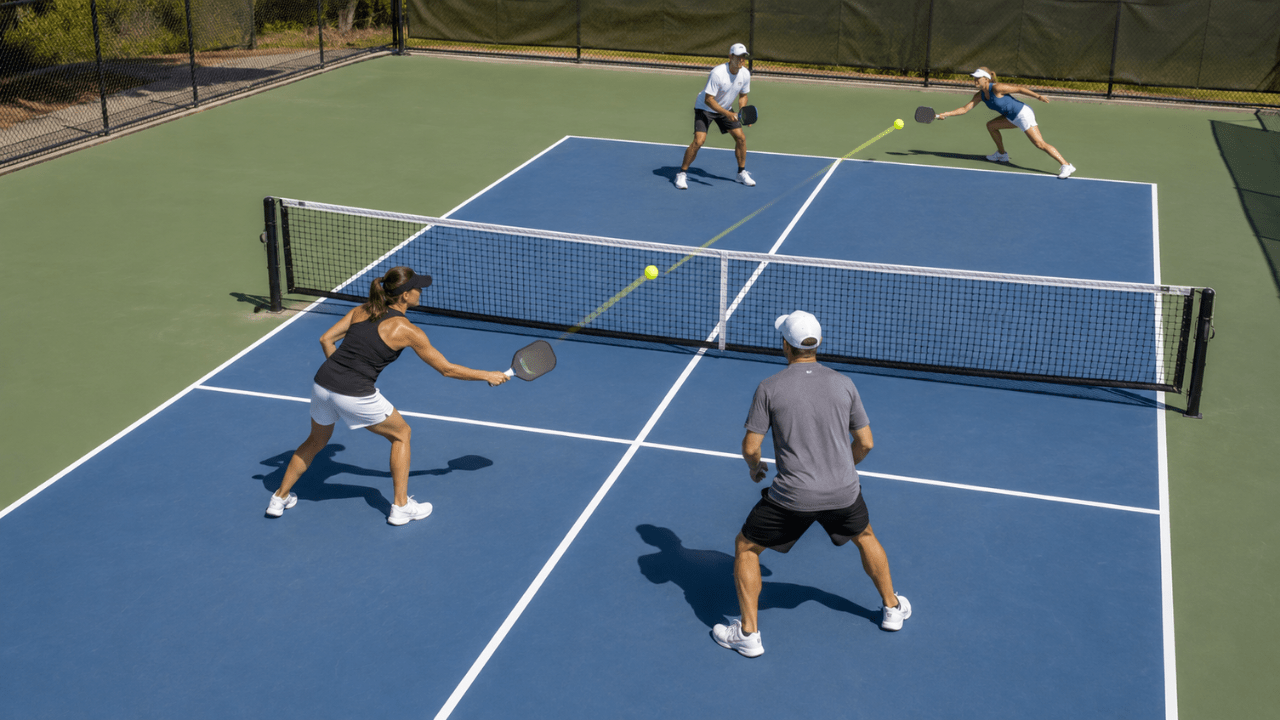
If you only master one dink, make it the cross-court dink. It is the most effective dink in the game, and the reason comes down to geometry.
When you dink cross-court, the ball travels over the lowest part of the net (the center) and has the longest possible distance to travel before landing in the kitchen. This gives you more margin for error in two dimensions simultaneously: net clearance and landing depth. A straight dink has a much smaller window to work with.
Cross-court dinking also pulls your opponent out of position. If they are forced wide to retrieve a cross-court dink, they open up the line for your next shot. The best kitchen battles are won through this kind of geometric pressure, moving the opponent repeatedly until they are off-balance or forced into a ball that sits up.
How to Execute the Cross-Court Dink
- Open your paddle face slightly to angle the ball diagonally across the court
- Use shoulder rotation to direct the ball, not your wrist
- Aim for the opponent’s kitchen sideline corner, not deep into the kitchen
- Keep your follow-through pointing toward your target angle
Soft Hands: The Foundation of Great Dinking
You will hear the phrase soft hands constantly at any intermediate or advanced pickleball clinic. It refers to the ability to absorb the pace of an incoming ball and redirect it gently, rather than reacting with equal or greater pace.
Hard hands are the opposite problem. When a player uses hard hands, every dink they hit is firm and tends to float. Their dinks sit up and give the opponent easy attack opportunities. Soft hands mean your dinks stay low, stay controlled, and are difficult to attack.
How to Develop Soft Hands
- Practice catching and releasing on the paddle face rather than pushing through the ball
- Use wall dink drills to practice absorbing different speeds
- Play dink rallies intentionally slower than feels natural
- Focus on the feel of the ball on the paddle at contact, not the outcome of the shot
Soft hands cannot be developed overnight, but they are the single most important physical skill for the pickleball soft game. Players with excellent soft hands can reset any speed-up and make even aggressive attackers look ineffective.
Dinking Strategy: The Patience Game
The biggest reason recreational players fail at dinking is not mechanical. It is mental. Dinking requires patience, and patience under pressure is a skill most players have never deliberately practiced.
The kitchen game can go on for 10, 20, or even 30 shots before anything happens. During that time, the pressure to do something, to attack, to end the rally, builds constantly. Players who give in to that pressure and attack a ball below the net are the ones who lose the rally.
A great dinking strategy is not about winning the point with a dink. It is about forcing your opponent into a dink they cannot execute cleanly, one that pops up, sits high, or drifts wide. That is the ball you attack.
Setting Up the Attack from Dinking Position
The speed-up from dinking position works best when your opponent is fully settled into a slow rhythm and not expecting a change. Here is how to set it up:
- Dink patiently for several shots to establish a predictable rhythm
- Watch for any ball that rises above the net height on your side
- Accelerate suddenly toward the opponent’s body or dominant shoulder, the hardest position to defend
- Follow your attack toward the net immediately to cut off the return angle
Erne Shot Setup from Dinking Position
The Erne is an advanced shot where a player moves outside the kitchen to volley a cross-court dink before it lands. It is one of the most effective and unexpected shots you can play from a dinking rally.
To set up an Erne, dink cross-court repeatedly to pull your opponent wide. When they expect another cross-court dink, step outside the kitchen boundary, jump, and volley the ball at a sharp angle they cannot cover. Timing, disguise, and positioning are everything.
How to Improve Your Dinking: Best Drills
Knowing how to dink and being able to execute it consistently under pressure are two very different things. These five drills will build the muscle memory and mental discipline your kitchen game needs.
1.Wall Dink Drill
Stand 7 feet from a wall and dink the ball softly against it repeatedly. Focus on keeping the ball low and the exchange consistent. This builds the compact swing and soft touch without requiring a partner.
2. Cross-Court Dink Rally Drill
With a partner, stand at opposite kitchen corners and dink cross-court for as long as possible without an error. Count consecutive dinks and try to beat your record each session. This is the single best drill for kitchen game development.
3. The Reset Drill
A partner feeds you fastballs from the transition zone. Your only job is to reset each one softly into the kitchen. No attacking. No, trying to win the point. This builds the soft hands and defensive discipline needed to survive speed-up situations in real matches.
4. The 100-Dink Challenge
Dink straight across with a partner and count to 100 consecutive dinks without an error. This sounds simple and is surprisingly difficult. The concentration and consistency required to reach 100 will transform your kitchen game faster than almost anything else.
5. Target Dinking Drill
Place a cone, a can, or a piece of tape in the kitchen corner and try to land dinks on it. Precision dinking under a target forces you to think about placement and intention, not just clearing the net.
Common Dinking Mistakes and How to Fix Them
Popping the Ball Up
Cause: too much upward swing or contacting the ball too low on the paddle face. Fix: focus on a flatter, more controlled push and contact the ball in the center of the paddle.
Dinking Too Hard or Too Fast
Cause: anxiety or impatience during a long kitchen rally. Fix: deliberately slow your dinks down. A slower dink that stays low and lands at your opponent’s feet is more dangerous than a faster dink that floats up into their attack zone.
Poor Footwork at the Kitchen Line
Cause: flat feet or a stance that is too wide, making lateral movement difficult. Fix: stay light on your feet with knees bent and be prepared to step laterally to reach wide dinks cleanly.
Telegraphing Your Attacks
Cause: changing your body position or backswing before attacking, giving your opponent a read. Fix: keep your preparation identical for dinks and speed-ups. The only difference should be contact speed, not your setup.
Not Watching the Ball Through Contact
Cause: watching your opponent instead of the ball through contact. Fix: train yourself to watch the ball all the way onto the paddle on every single dink, every single time. This one habit change will improve your consistency immediately.
Stop Trying to Win with Power. Start Winning with Patience.
Here is the shift that changes everything for most pickleball players: you do not win the kitchen game by hitting harder. You win it by making fewer mistakes than your opponent, and by staying calm long enough for them to make one.
The dink shot is the tool that makes that happen. It is not a passive shot. It is a strategic one. Every low, well-placed dink is a problem you are handing your opponent. Every patient rally is pressure you are applying without them feeling it. And every time you resist the urge to attack a ball below the net, you are winning the mental battle as much as the physical one.
Pick one drill from this guide and commit to it in your next three sessions. Not all five. Just one. The 100-dink challenge or the cross-court rally drill are the best starting points. Your kitchen game will look different within a month.
At Evolute Pickleball, we engineer every EV-11 to perform consistently across exactly the kind of high-touch, repetitive play the kitchen game demands. Consistent bounce, predictable flight, and USAPA-compliant construction so the ball never becomes the variable in your game. Shop the EV-11 here and play a ball built for the way the best players play.