What Are Pickleballs Made Of?
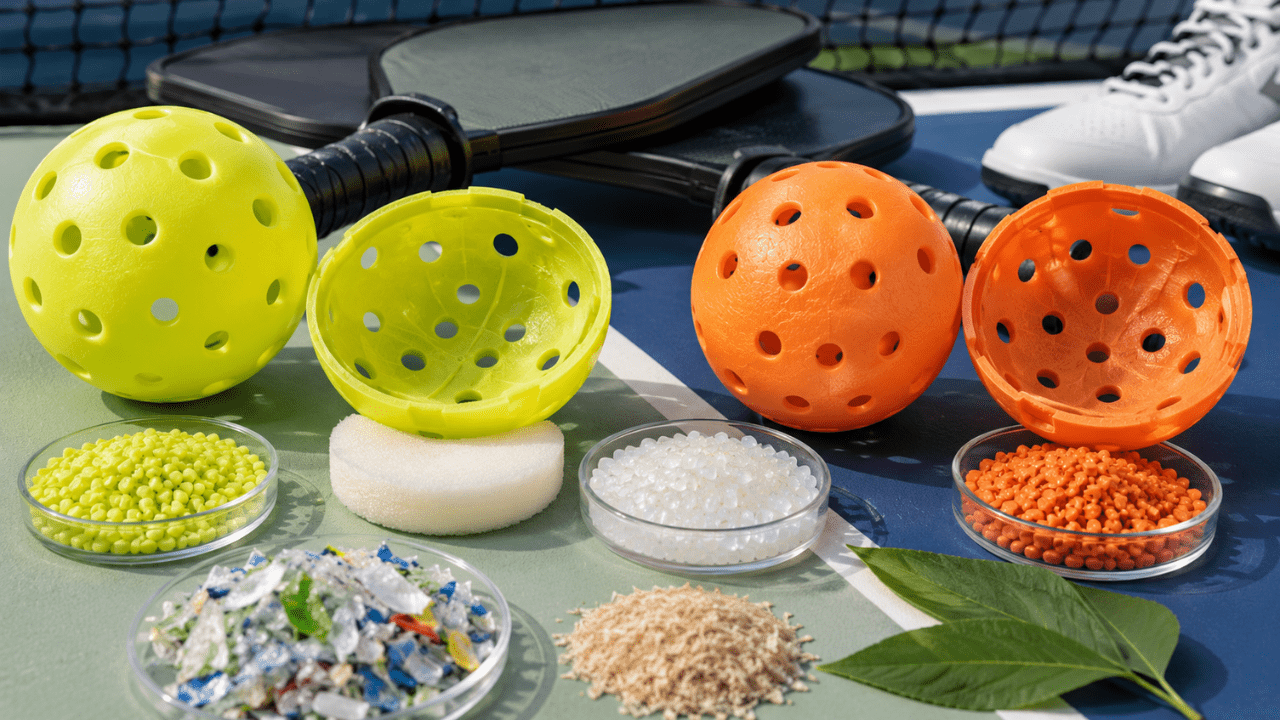
A pickleball is a hollow ball made from a single piece of durable, lightweight plastic, with a set of evenly spaced holes that control its flight and speed.
Unlike a tennis ball, which is made from rubber and felt, or a wiffle ball, which uses very soft plastic, a pickleball requires a stiff, resilient polymer that can withstand thousands of hard hits while maintaining a consistent bounce and a true, predictable flight path.
To meet competitive standards, balls must also fall within strict size, weight, hardness, and bounce limits set by USA Pickleball’s approved equipment standards.
That balance of stiffness, durability, and consistency is why nearly all pickleballs are molded from one of two plastics in the polyolefin family.
The Main Plastics Used in Pickleballs
Polyethylene
Polyethylene is a flexible, impact-resistant plastic most often used for indoor pickleballs.
Indoor balls are commonly made from low-density polyethylene (LDPE). This softer, more forgiving material gives players better control and maneuverability on smooth gym floors.
The tradeoff is a lower, slower bounce compared with harder outdoor balls.
Polypropylene
Polypropylene is stiffer and more weather-resistant, which makes it the standard choice for many outdoor pickleballs.
Its hardness allows the ball to withstand rough court surfaces such as asphalt and concrete. It also helps the ball stay more stable in the wind, producing the faster and higher bounce that outdoor players expect.
The downside is that harder plastic is more prone to cracking in cold weather or after heavy use.
Indoor vs Outdoor Pickleball Material
The plastic is only part of the difference between indoor and outdoor pickleballs.
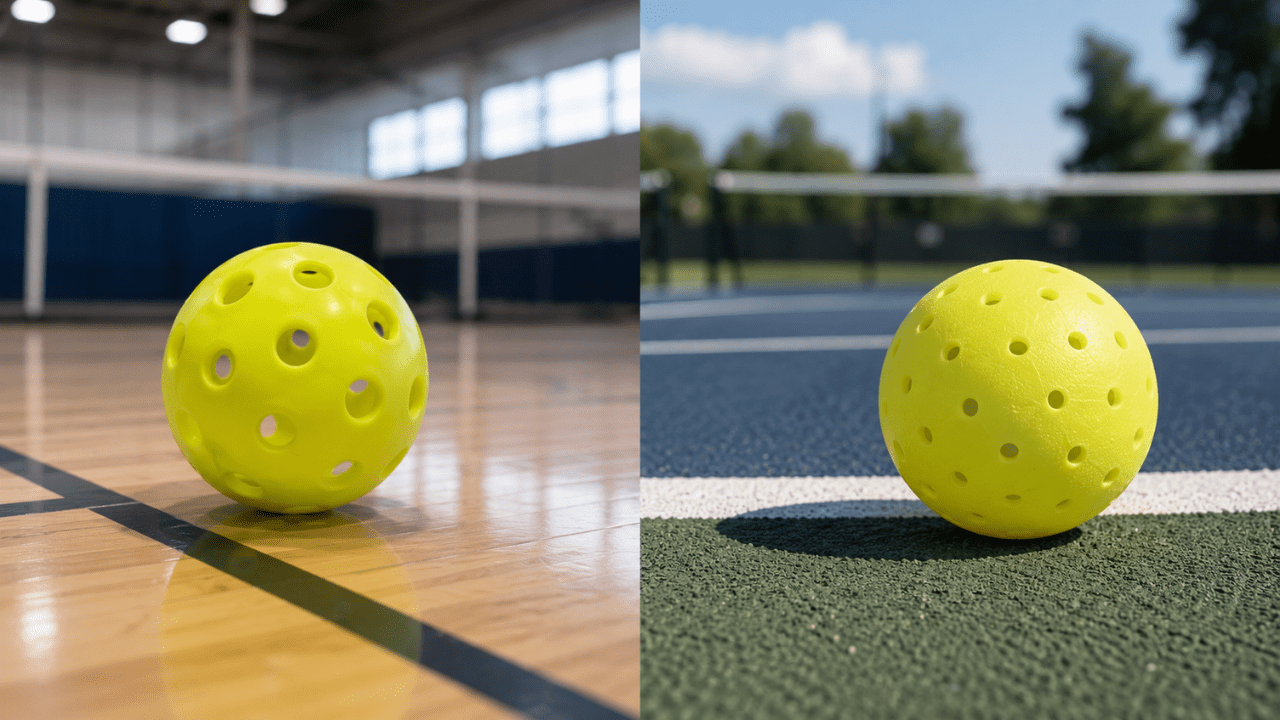
Indoor balls typically use a softer polyethylene body with 26 larger holes. This design supports better control and a softer feel on smooth indoor courts.
Outdoor balls usually use a harder polypropylene body with 40 smaller, tightly spaced holes. This hole pattern improves aerodynamic stability in the wind and helps the ball perform better on rough outdoor surfaces.
For a full breakdown of how these two ball types play differently, see our guide to indoor vs outdoor pickleballs.
How Pickleballs Are Manufactured
The molding method changes a pickleball’s seam, bounce, durability, and overall playing feel. There are two main manufacturing methods used to make pickleballs.
Injection Molding
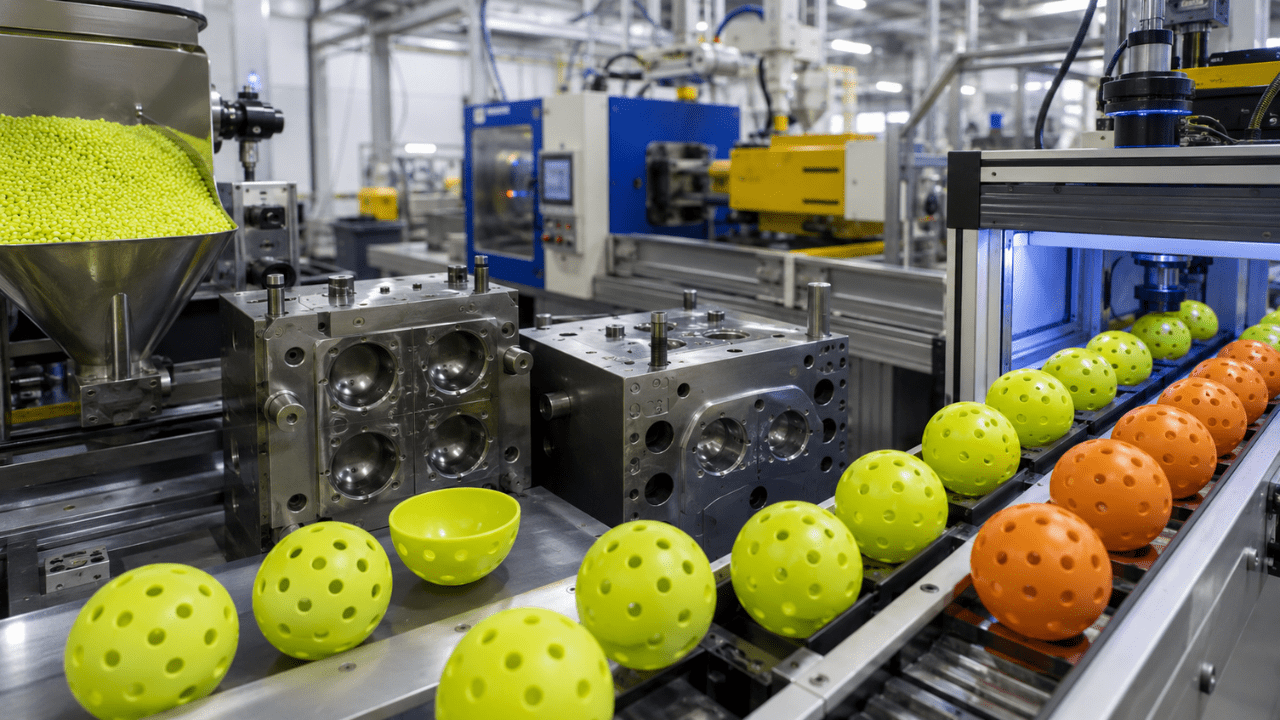
In injection molding, plastic pellets are melted and injected into a mold to form two identical halves. Those halves are then fused to create the finished ball.
This process usually leaves a visible seam and tends to produce a livelier, higher bounce. Injection molding is most common for indoor 26-hole balls.
Rotational Molding
In rotational molding, plastic is placed inside a mold that slowly spins until the material sets into a seamless, single-piece shell. After the shell is formed, the holes are drilled.
Rotational molded balls are seamless, fast, and generally more durable. This is why the process is traditionally used for outdoor 40-hole pickleballs.
Why Material and Manufacturing Affect Performance
Plastic type, wall thickness, hole pattern, and molding method all work together to determine how a pickleball performs and how long it lasts.
Harder outdoor balls usually deliver faster play, better wind resistance, and a sharper bounce. However, they may crack sooner, especially in cold temperatures or after repeated impact.
Softer indoor balls offer more control and a more forgiving feel, but they may lose shape and bounce over time.
If you want to understand what separates a reliable ball from an inconsistent one, read our guide on what makes a pickleball consistent. For a realistic look at ball lifespan, see how long pickleballs last.
The Sustainability Problem With Traditional Pickleball Plastics
The same hard polymers that make pickleballs durable also make them difficult to dispose of responsibly.
Most pickleballs are small, hollow, and perforated. Because of this, standard curbside recycling systems often reject them. Many balls are also made from specialized plastics that can sit in landfills for a very long time.
As more players join the sport and more balls crack or lose performance, pickleball waste continues to grow.
We cover this issue in more detail in our guide to pickleball recycling challenges and sustainable solutions, along with practical steps in our article on how to recycle pickleballs.
Eco-Friendly and Recycled Pickleballs Alternatives
As awareness grows, several greener material approaches are emerging. Each option is at a different stage of development.
Recycled Plastic Pickleballs
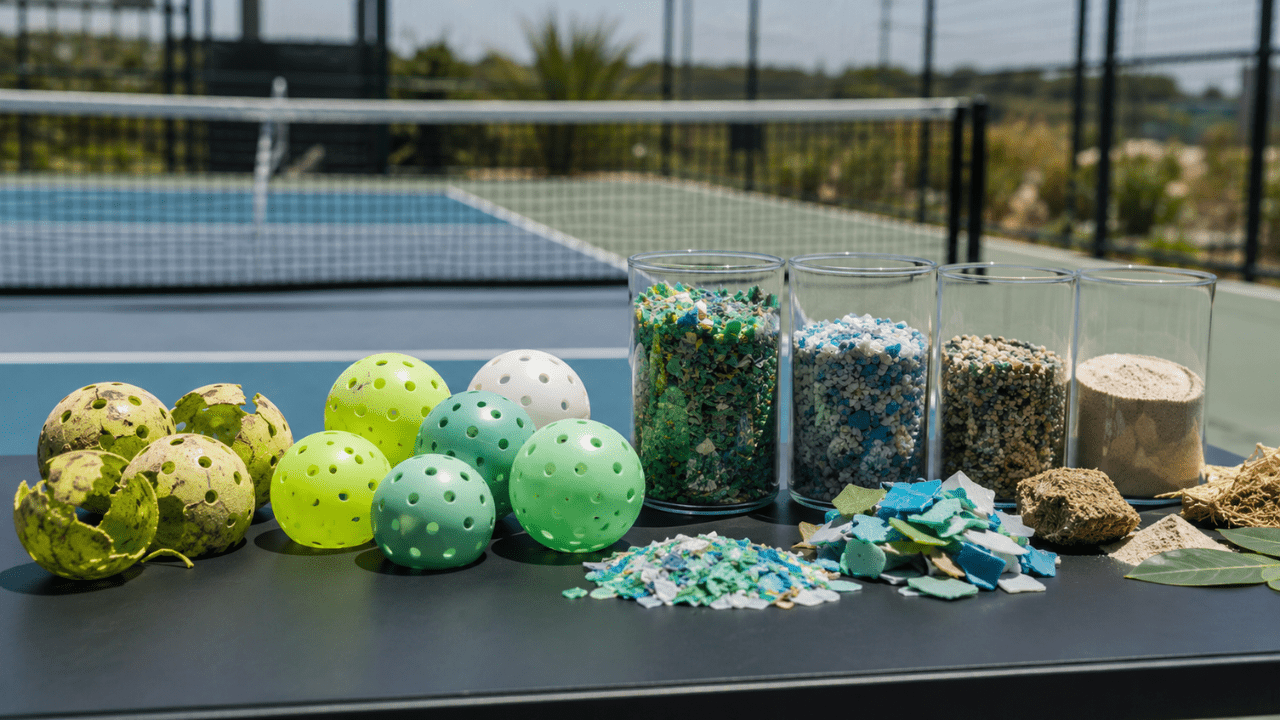
Recycled pickleballs are made partly from reclaimed plastic, including materials such as ocean-bound plastic.
This approach helps divert plastic waste from landfills while keeping the performance benefits of conventional materials. Because these balls still use durable polymers, they can also be engineered to remain recyclable at the end of life.
TPE and Recyclable Polymers
Thermoplastic elastomer, also known as TPE, is a non-toxic and recyclable plastic.
TPE can use less energy to produce than some traditional materials and can be remelted or reextruded. This makes it easier to recycle than materials such as PVC or standard polypropylene.
Compostable and Bio-Based Materials
Some newer experiments use plant-based inputs such as wheat straw and rice husk to create compostable pickleballs.
These materials are designed to break down faster than conventional plastic and reduce long-term plastic waste.
The honest caveat is that most compostable or bio-based pickleballs do not yet match the durability, bounce, and consistency required for competitive play. For now, they remain a niche option rather than a full replacement.
Reuse and Repurposing
Sustainability is not only about the material itself.
Some programs collect used pickleballs and repurpose them into products such as playground equipment, sports surfaces, or other recycled plastic goods. This extends the life of the material before it reaches a landfill.
How Evolute Pickleball Approaches Sustainable Pickleballs
At Evolute Pickleball, the goal is to keep the performance players expect while reducing the waste the sport creates.
Our USA-approved recycled pickleballs are built with recycled ocean-bound plastic material and designed to be fully recyclable. That means players can enjoy consistency on the court without ignoring the environmental impact of the game.
You can read more about our material philosophy in our guide to the rise of sustainable pickleball design.
Key Takeaways
Most pickleballs are molded from a single hard plastic. Indoor balls are commonly made from polyethylene, often LDPE, while outdoor balls are commonly made from polypropylene.
Indoor pickleballs are softer and usually have 26 larger holes. Outdoor pickleballs are harder and usually have 40 smaller holes for better wind stability.
Injection-molded balls usually have a seam and a livelier bounce. Rotational molded balls are seamless and often more durable.
Traditional pickleball plastics are durable, but they are difficult to recycle through standard curbside systems.
Greener options are emerging, including recycled plastic pickleballs, recyclable polymers, and early-stage compostable materials.
Choosing recycled and recyclable pickleballs is currently the most practical way to play more sustainably without sacrificing performance.