Modern pickleball paddles are designed with far more precision than many players realize. Weight distribution, paddle surface texture, and construction materials all directly influence how the ball reacts during play.
From generating topspin on aggressive drives to maintaining control during soft kitchen exchanges, the paddle you choose can significantly affect consistency, reaction speed, comfort, and confidence on the court.
Understanding how paddle weight, spin technology, and materials work together helps players make smarter equipment decisions and improve overall performance.
Why Pickleball Paddle Selection Matters
Unlike tennis rackets, pickleball paddles rely entirely on their surface and core construction to generate power, spin, and touch.
While both sports involve racket-style equipment, the differences in construction, weight, and gameplay mechanics are significant.
Our guide to pickleball paddle vs. tennis racket breaks down how each affects control, power, and overall playing style.
Even small design differences can influence:
- Shot consistency
- Ball speed
- Spin potential
- Hand speed during volleys
- Comfort during long matches
- Overall control under pressure
The right paddle should support your style of play while improving confidence and repeatability.
Understanding Pickleball Paddle Weight
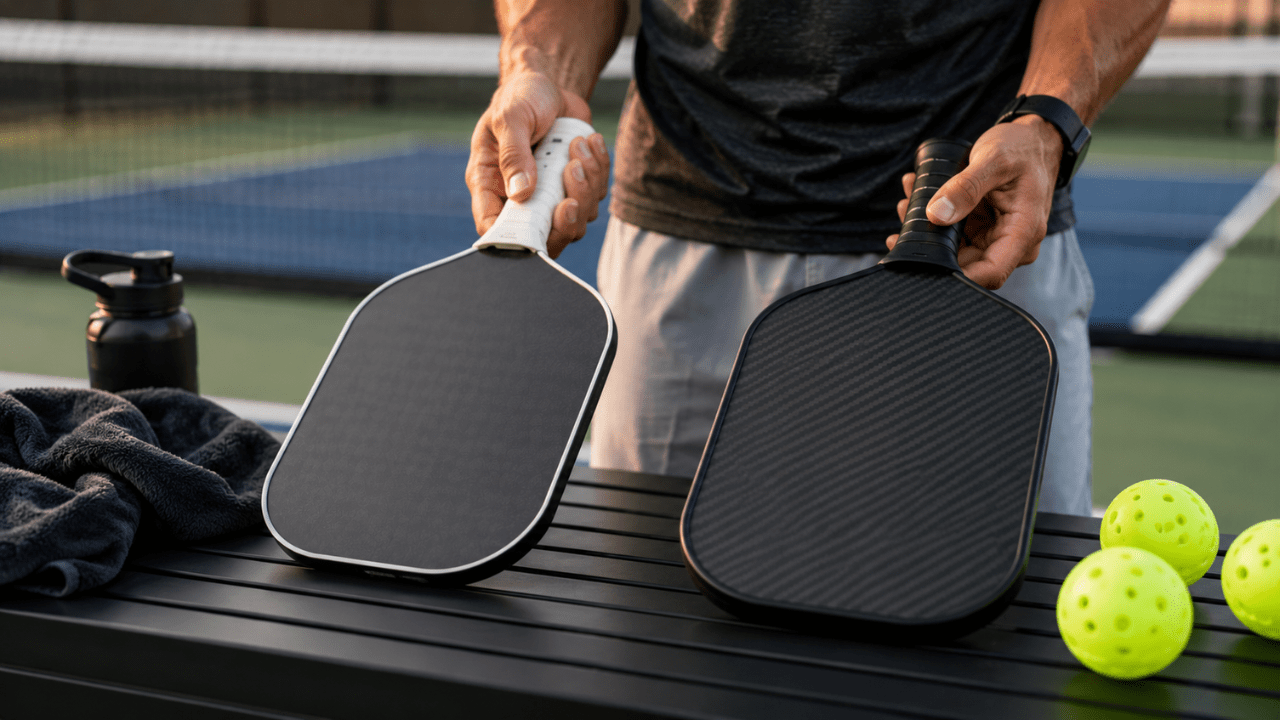
Weight is one of the most important factors in paddle performance.
Most paddles fall into three categories:
- Lightweight paddles: under 7.3 oz
- Midweight paddles: 7.3–8.4 oz
- Heavyweight paddles: over 8.4 oz
Each offers different advantages depending on how you play.
Lightweight Pickleball Paddles
Lightweight paddles prioritize speed and maneuverability.
Benefits
- Faster reactions during kitchen exchanges
- Easier control and touch shots
- Reduced arm fatigue
- Better maneuverability for defensive play
These paddles are popular among:
- Beginners
- Doubles players
- Control-focused players
Drawbacks
Because lightweight paddles create less natural momentum, some players may need to swing harder to generate power.
Midweight Pickleball Paddles
Midweight paddles provide the most balanced feel.
They offer:
- A combination of power and control
- Better stability than lightweight paddles
- Enough speed for quick exchanges
- Versatility for singles and doubles play
This category is often the most adaptable for a wide range of players
Heavyweight Pickleball Paddles
Heavy paddles generate more momentum and shot depth.
Benefits
- Increased power on drives and put-aways
- Greater stability during contact
- Easier pace generation
Over time, repeated high-impact play can also affect paddle structure and long-term consistency. Understanding issues like core crushing in pickleball paddles can help players evaluate durability alongside performance.
Drawbacks
Heavier paddles can reduce:
- Hand speed
- Maneuverability
- Long-match comfort
For fast kitchen exchanges, some players may prefer lighter options.
How Paddle Weight Impacts Playing Style
Understanding the differences between lightweight and heavyweight pickleball paddles helps players choose equipment that matches their playing style.
Lightweight paddles improve reaction speed and maneuverability, while heavyweight paddles generate more power and stability during aggressive shots.
Different paddle weights suit different play styles.
1. Control Players
Players who prioritize:
- Dinks
- Placement
- Soft resets
- Strategic rallies
often prefer lightweight or balanced paddles.
2. Aggressive Players
Players who focus on:
- Drives
- Speed-ups
- Power serves
- Offensive pressure
may prefer slightly heavier paddles.
3. All-Court Players
Balanced players often gravitate toward midweight paddles because they support both offense and defense.
How Spin Works in Pickleball
Spin has become one of the most important elements in competitive pickleball.
Topspin, slice, and sidespin can:
- Push opponents out of position
- Increase shot difficulty
- Create sharper angles
- Improve serve effectiveness
Modern paddles now use textured surfaces designed specifically to improve spin generation.
What Creates Spin on a Pickleball Paddle?
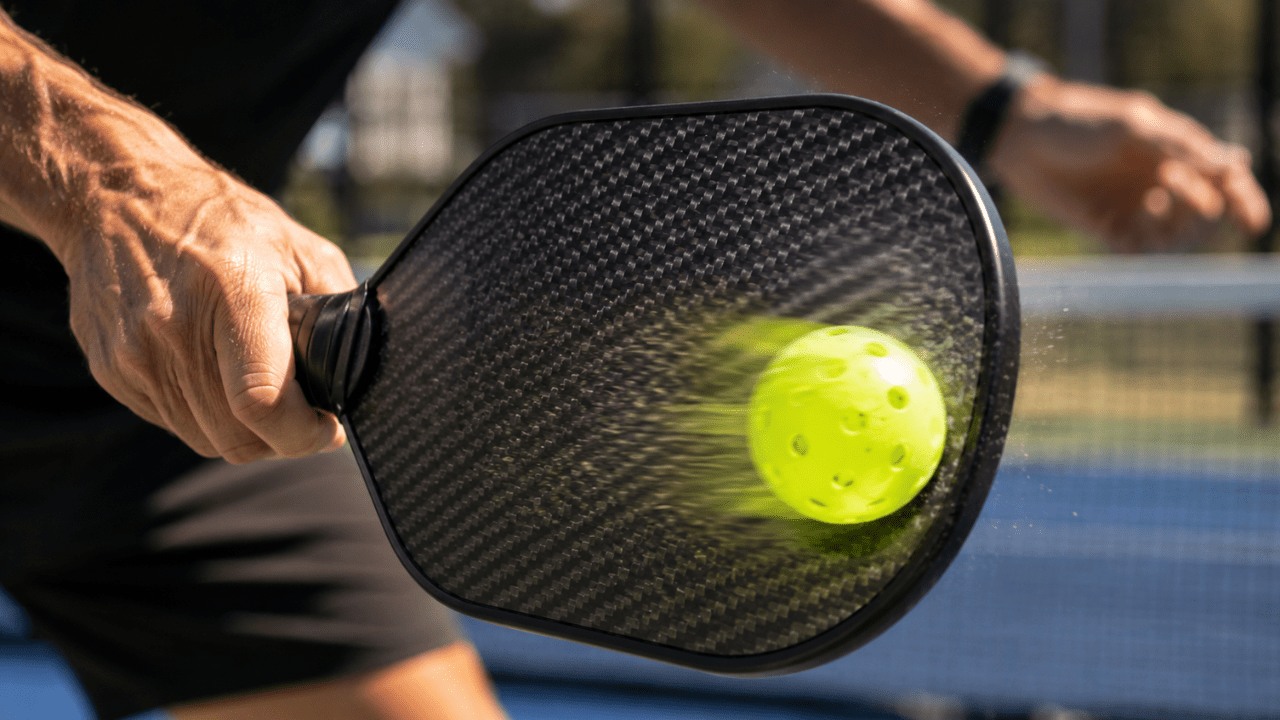
Players searching for the best pickleball paddle for spin often look for textured carbon fiber surfaces that create more friction during contact.
Modern spin-focused paddles are designed to improve ball grip, helping players generate heavier topspin, sharper slice shots, and better overall shot control.
Several factors influence spin potential.
1. Surface Texture
Textured paddle faces grip the ball longer during contact, helping generate:
- More topspin
- Sharper slice
- Greater shot control
2. Paddle Face Materials
Popular spin-focused materials include:
- Raw carbon fiber
- Textured composite surfaces
- Fiberglass blends
These materials create more friction during contact.
3. Swing Mechanics
Even the best spin paddle still depends on proper technique.
Players create better spin with:
- Controlled wrist movement
- Low-to-high swing paths
- Consistent contact points
The paddle supports spin, but mechanics create it.
Understanding Pickleball Paddle Materials
Paddle materials influence:
- Feel
- Power
- Durability
- Spin generation
- Responsiveness
The three most common paddle face materials are graphite, fiberglass, and carbon fiber.
Graphite Pickleball Paddles
Graphite paddles are lightweight and responsive.
Advantages
- Excellent control
- Fast hand speed
- Consistent touch and feel
These paddles are popular among finesse-oriented players.
Fiberglass Pickleball Paddles
Fiberglass paddles are designed for more pop and power.
Advantages
- Increased rebound effect
- More offensive feel
- Faster ball speed
Aggressive players often prefer fiberglass surfaces for their ability to support stronger attacking play.
Carbon Fiber Pickleball Paddles
Carbon fiber paddles have become one of the most popular materials for modern paddles.
Advantages
- Excellent spin capability
- Strong durability
- Consistent control
- Balanced feel
Raw carbon fiber surfaces are especially popular because they combine spin, touch, and responsiveness.
Paddle Core Materials Explained
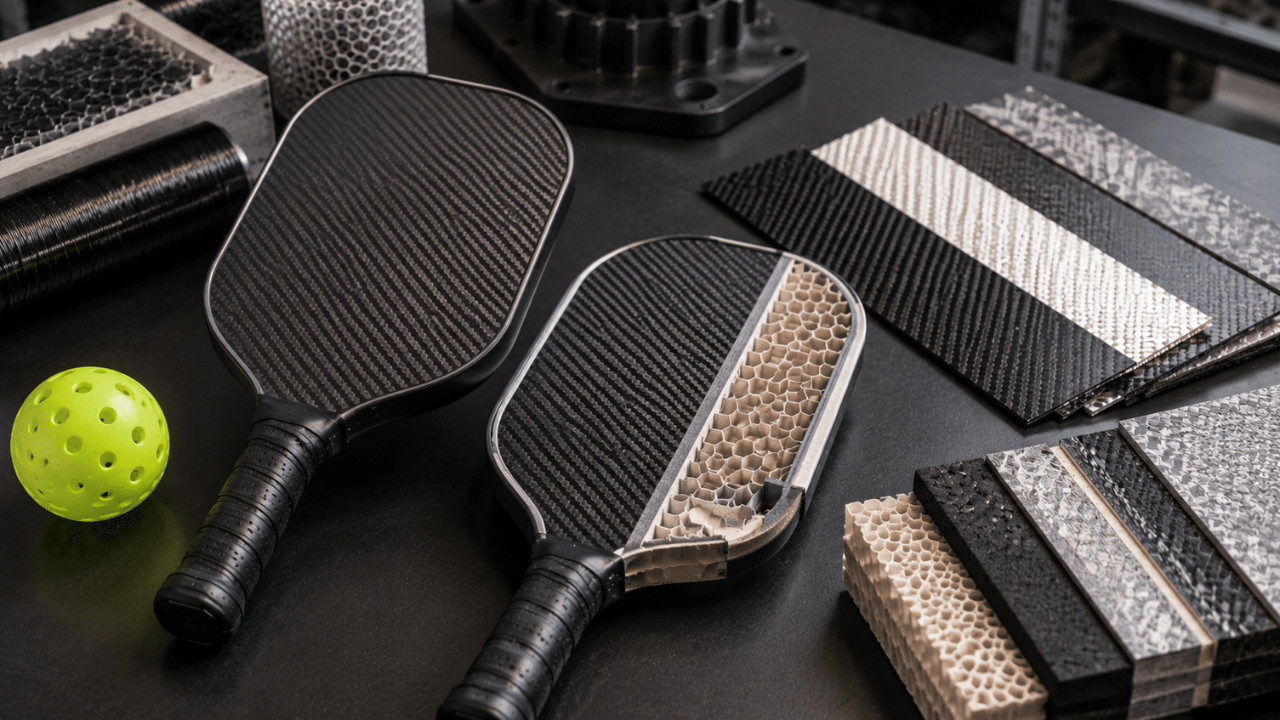
The paddle core greatly affects feel and performance.
Common core types include:
- Polymer cores
- Aluminum cores
- Nomex cores
Polymer Cores
The most common modern option.
Benefits include:
- Softer feel
- Better control
- Reduced noise
- Balanced performance
Aluminum Cores
Known for:
- Lightweight responsiveness
- Softer touch
Less common today but still preferred by some control-focused players.
Nomex Cores
Nomex cores provide:
- Harder feel
- Increased power
- Loud impact sound
These are often chosen by players seeking maximum pace.
Power vs Control: Finding the Right Balance
One of the biggest paddle decisions comes down to balancing power and control.
Power-Oriented Paddles
Typically features:
- Heavier construction
- Fiberglass surfaces
- Stiffer response
These paddles help players attack aggressively.
Control-Oriented Paddles
Usually provide:
- Softer feel
- Better touch
- More consistent placement
- Improved reset control
Control-focused paddles support patience and strategic play.
How to Choose the Right Pickleball Paddle for Your Skill Level
Understanding your playing style, comfort preferences, and performance goals is one of the most important parts of learning how to choose a pickleball paddle that fits your game.
Beginners
Most beginners benefit from:
- Midweight paddles
- Polymer cores
- Balanced comfort and control
Intermediate Players
Intermediate players often start selecting paddles based on:
- Playing style
- Desired pace
- Spin needs
- Offensive vs. Defensive Balance
Advanced Players
Advanced players usually prioritize:
- Spin capability
- Precision feel
- Fast hand speed
- Weight balance and responsiveness
Why Consistent Equipment Matters
The best pickleball paddle is not always the most expensive one. Consistency matters more than hype.
A paddle should:
- Feel comfortable in hand
- Match your playing style
- Support reliable shot execution
- Improve confidence during pressure moments
At Evolute Pickleball, we focus on performance-driven products designed to support consistency, durability, and smarter gameplay.
Sustainable Equipment and Smarter Play
Performance and sustainability are becoming increasingly connected in modern pickleball equipment.
At Evolute Pickleball, every EV pickleball is manufactured with 10% reclaimed ocean-bound plastic and made from fully recyclable #2 MDPE materials. This approach helps reduce plastic waste while maintaining the durability and consistency players expect on the court.
The innovation behind sustainable paddle materials continues evolving as more companies explore recycled construction methods and performance-focused design. Our blog on the journey of a recycled plastic pickleball paddle takes a closer look at how recycled materials are being transformed into modern pickleball equipment.
Players looking for high-performance pickleballs designed with sustainability in mind can explore the Evolute collection here: Evolute Pickleball Shop.
Smarter Paddle Choices Lead to Better Performance
Understanding paddle weight, spin technology, and materials helps players make more informed decisions on the court.
Lightweight paddles improve speed and maneuverability. Heavier paddles create power and stability. Carbon fiber surfaces improve spin potential, while core construction affects touch and responsiveness.
No single paddle fits every player. The right choice depends on your style of play, comfort level, and performance goals.
As paddle technology continues to evolve, players who understand these differences will be better prepared to improve consistency, adapt strategically, and elevate their game.