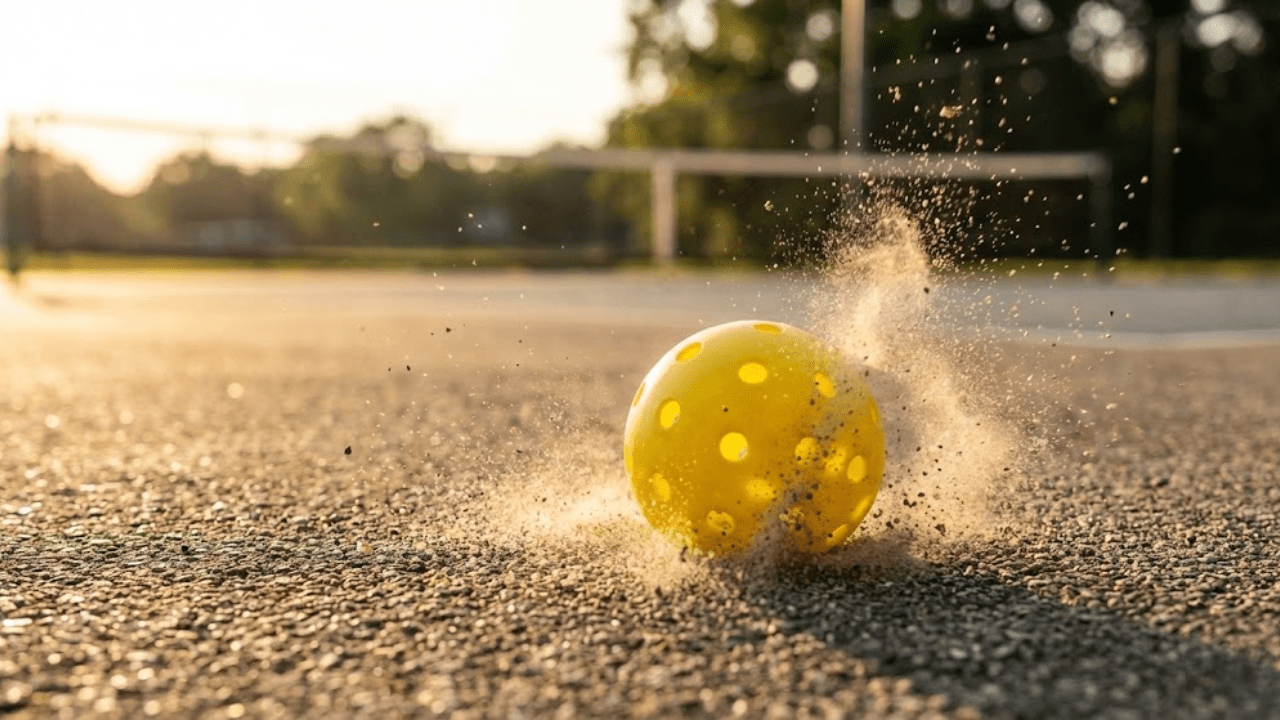
Pickleball consistency is not accidental. When a pickleball feels predictable, fair, and reliable, it results from intentional engineering across three critical areas: bounce behavior, shape integrity, and long-term durability. Even small inconsistencies in any of these factors can change how the ball performs, how long it lasts, and how enjoyable the game feels.
For players, consistency builds confidence and rhythm. For sustainability-driven brands, consistency must also prove that recycled materials can meet real performance expectations.
Why Pickleball Consistency Matters
Consistency in quality of pickleballs matters because its reacts the same way under the same conditions. That means predictable bounce height, stable flight, and uniform response off the paddle. Inconsistent balls introduce randomness, disrupt timing, and reduce the quality of play.
Consistency directly impacts:
- Shot accuracy and timing
- Rally flow and pace
- Player confidence and fatigue
- Fairness across matches
From a design standpoint, consistency is not a single feature. It is the outcome of controlled materials, precise manufacturing, and disciplined performance testing.
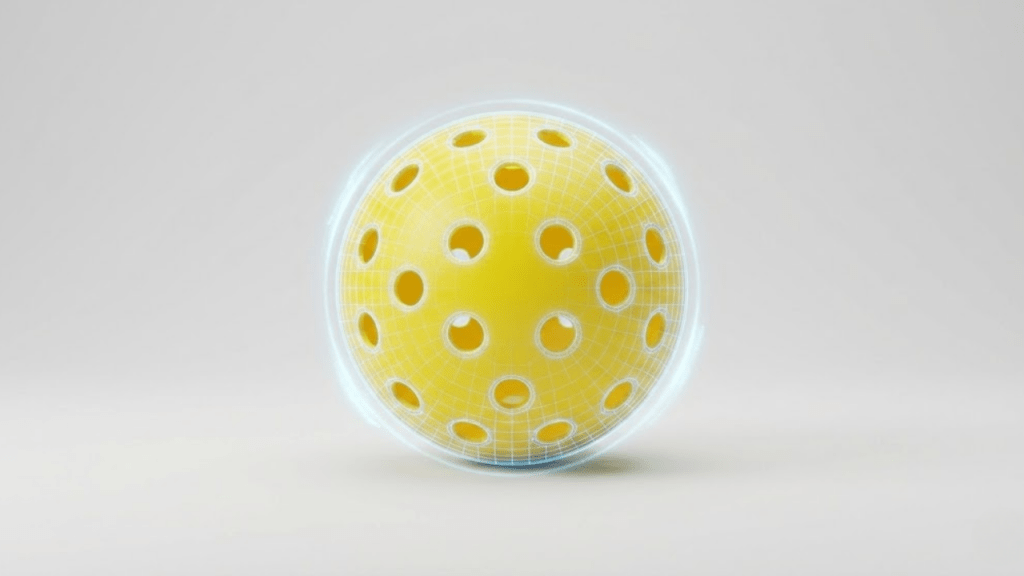
Bounce Consistency: The Foundation of Predictable Play
Bounce consistency depends on how evenly a pickleball compresses and rebounds when it strikes the court. Several factors influence this behavior:
- Material elasticity
- Wall thickness uniformity
- Internal air pressure balance
- Surface hardness
A well-engineered pickleball returns to nearly the same height on every bounce. This repeatability allows players to anticipate positioning and execute shots with confidence.
For eco-friendly pickleball equipment, achieving consistent bounce is especially important. Sustainable materials must be processed correctly to ensure they perform on par with traditional plastics.
For a deeper technical look at how performance changes over time, check our guide on pickleball ball durability and lifespan expands on how bounce degradation often begins before visible damage appears.
Indoor vs Outdoor Bounce Behavior
Indoor and outdoor environments place different demands on pickleballs. Outdoor balls are typically firmer to withstand rougher surfaces and wind exposure, while indoor balls are slightly softer to prioritize control and quieter play. Regardless of environment, consistency means the ball maintains its intended bounce profile across multiple games rather than changing dramatically after short use. Our detailed breakdown of indoor vs outdoor pickleballs helps players understand how design choices influence bounce, durability, and overall feel.
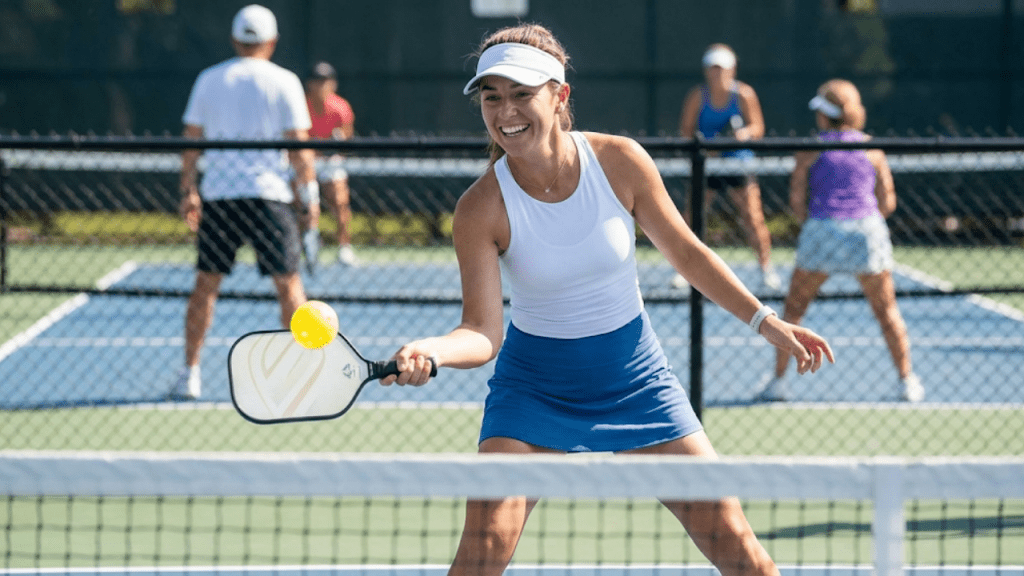
Shape Consistency: Why Roundness Is Critical
A pickleball must remain round to perform consistently. Even minor deformation can affect:
- Flight stability
- Spin response
- Bounce angle
- Shot accuracy
When a ball loses its shape, players often notice wobbles in the air or unpredictable bounce patterns that disrupt timing.
Hole Pattern Precision
Hole alignment and spacing are just as important as roundness. Uniform hole patterns create balanced airflow, which stabilizes flight and reduces erratic movement. Poor symmetry introduces turbulence, making the ball feel inconsistent even if the material itself is durable.
For historical context on how pickleball design has evolved to prioritize shape accuracy, see Pickleballs Evolution: From Plastic Toys to High Performance Gear.
Durability: Consistency Over the Life of the Ball
Durability is not just about preventing cracks. A durable pickleball maintains consistent performance throughout its usable life.
A ball that survives but gradually loses bounce, hardens unevenly, or deforms creates inconsistency long before visible failure occurs.
Durability depends on:
- Resistance to microfractures
- Impact absorption capability
- Material fatigue control
- Environmental stress tolerance
Common Causes of Performance Degradation
Many pickleballs lose consistency before they crack. Common signs include:
- Gradual reduction in bounce height
- Hardening that increases speed unpredictably
- Surface wear that alters grip and spin
- Subtle shape deformation that affects flight
Lower-quality materials often degrade unevenly, which explains why some pickleballs feel unreliable after only a few sessions.
Sustainability and Durability Can Coexist
There is a misconception that recycled materials compromise durability. In reality, when recycling processes are controlled and material blends are engineered correctly, recycled pickleballs can deliver excellent longevity and consistent play.For deeper context, explore Evolute’s sustainability perspective on the importance of recycling pickleballs.
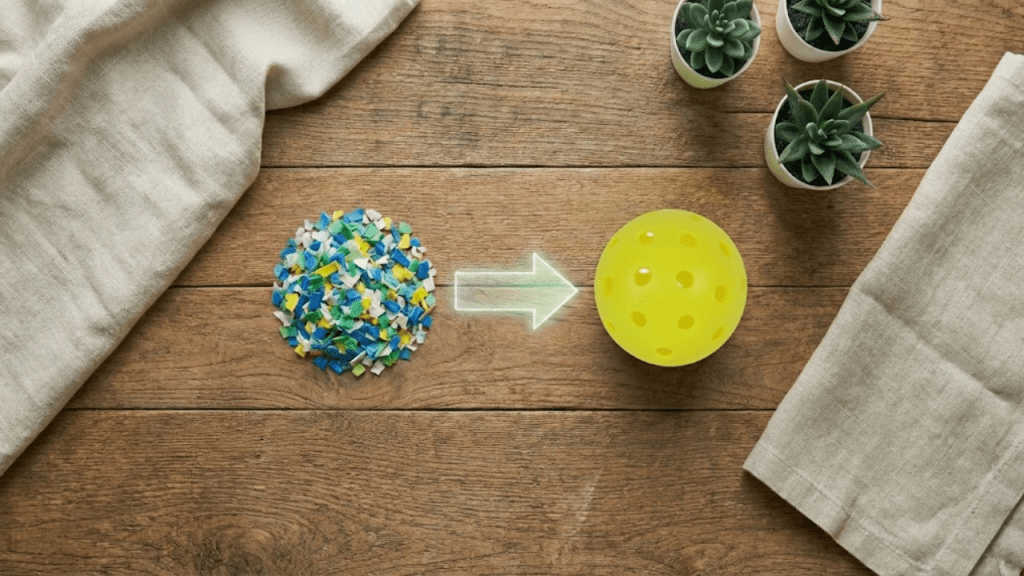
How Manufacturing Quality Impacts Consistency
Design alone does not guarantee consistency. Execution matters.
Manufacturing factors that directly influence performance include:
- Mold precision and uniform cooling
- Tight tolerance control
- Consistent material batches
- Post-production quality testing
High consistency comes from processes designed for repeatability, especially when sustainability goals are involved.
How Players Can Identify a Consistent Pickleball
You do not need specialized equipment to recognize consistency. Most players notice it instinctively.
Signs of a consistent pickleball include:
- Predictable bounce during warm-ups
- Stable flight without wobble
- Uniform feel across multiple games
- No sudden performance drop after limited use
If a ball behaves differently under similar conditions, it lacks consistency.
Sustainability in Motion
At Evolute Pickleball, consistency and sustainability move forward together. Recycled pickleball balls are engineered with the same performance expectations as traditional balls while delivering meaningful environmental benefits.
Ready to play a better game? Explore our collection of high-performance, longer-lasting gear that respects the court and the planet.
Frequently Asked Questions
Q. Do recycled pickleballs perform consistently?
A. Yes. When engineered correctly, recycled pickleballs can deliver stable bounce, shape retention, and durability comparable to traditional pickleballs.
Q. Why do some pickleballs crack faster than others?
A. Cracking is typically caused by brittle materials, uneven wall thickness, or poor temperature resistance rather than normal surface wear.
Q. How long should a consistent pickleball last?
A. Lifespan depends on play intensity and surface type, but a quality pickleball should maintain consistent performance across many sessions before degrading.
Q. Does consistency matter for casual players?
A. Yes. Consistency improves enjoyment, reduces frustration, and helps players develop better technique at every level.