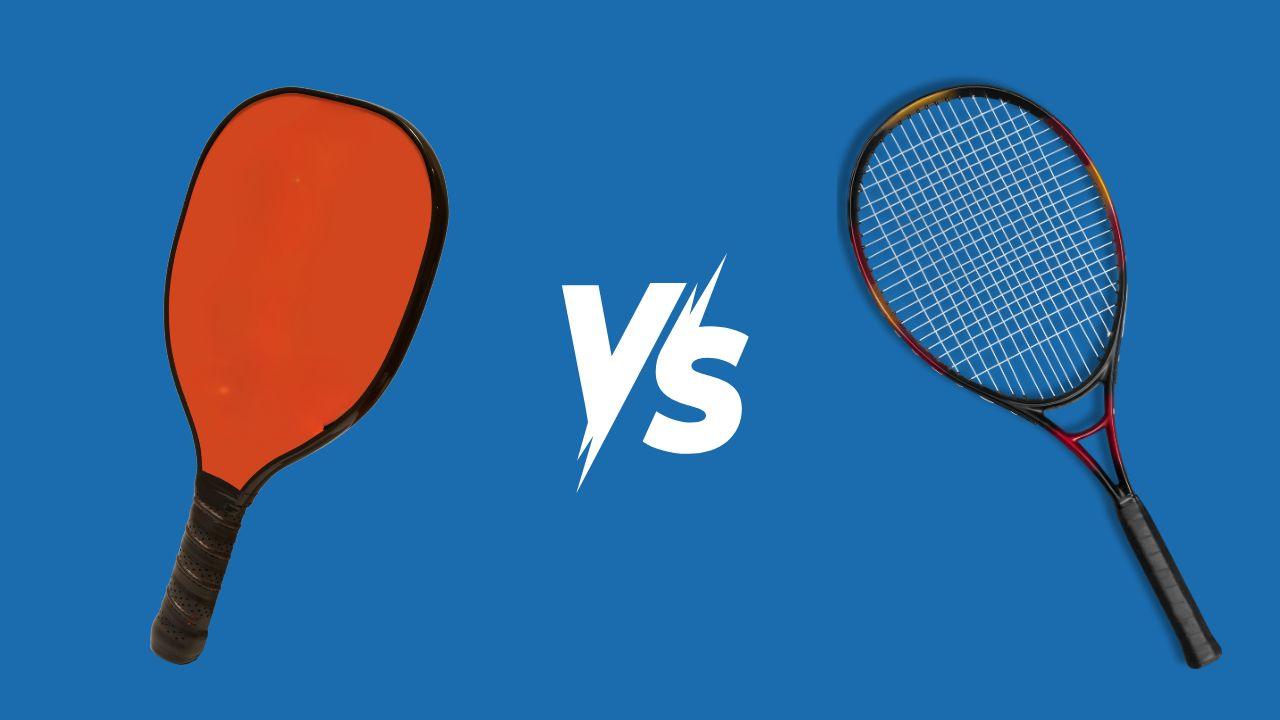
Pickleball is booming in popularity, and many players are coming from a tennis background to try this exciting paddle sport. At first glance, a pickleball paddle and a tennis racket might seem similar – both are hand-held implements used to hit a ball.
However, these two pieces of equipment are quite different in size, structure, and playability. Understanding the differences is crucial for players with a tennis background who are picking up pickleball, as it helps in choosing the right gear and adapting techniques.
In this friendly guide, we’ll compare pickleball paddles and tennis rackets, explain the technical differences in simple terms, and offer tips for transitioning from tennis to pickleball. Whether you’re a recreational player or an intermediate looking to up your game, this comparison will clarify how the equipment differs and how that affects your gameplay.
Paddle vs. Racket: Physical and Technical Differences
Let’s break down the core differences between a pickleball paddle and a tennis racket. The table below provides a side-by-side comparison of key physical and technical aspects, followed by explanations of each aspect in plain language.
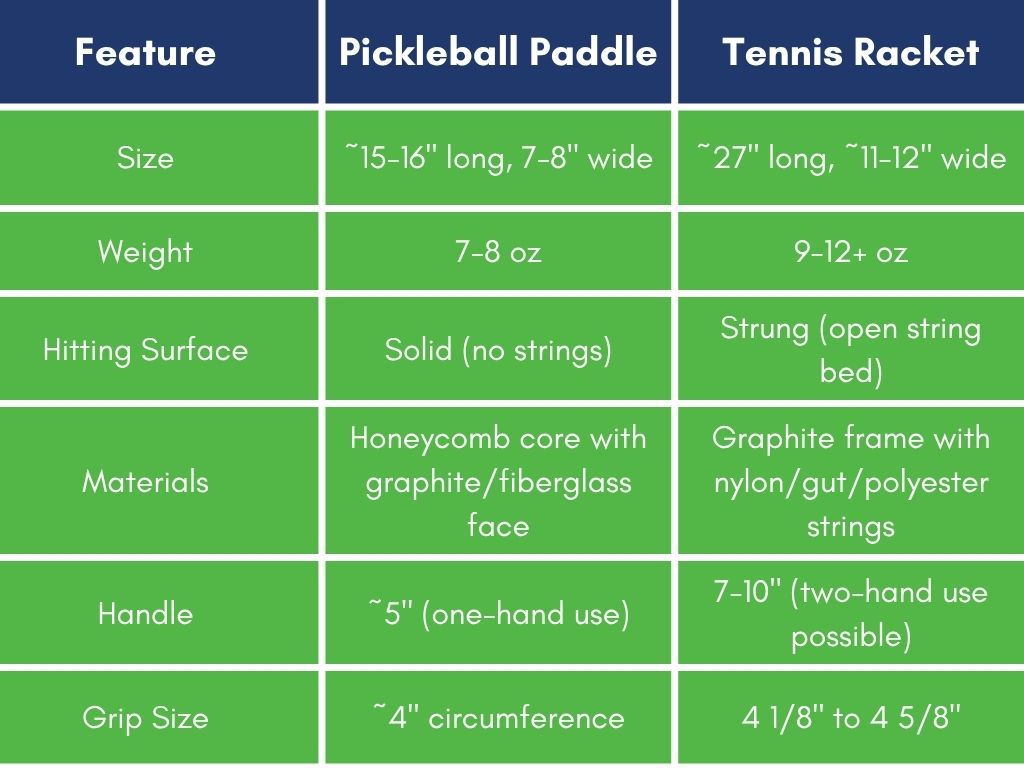
Paddle vs. Racket: Key Differences
1. Size & Shape
- Pickleball Paddle: Typically 15–16 inches long and 7–8 inches wide. Rectangular or oval in shape with a flat surface. Smaller sweet spot but better maneuverability—ideal for quick net play.
- Tennis Racket: Standard length is about 27 inches with a wider head (around 11–12 inches). Oval-shaped string bed offers a larger sweet spot, making it easier to hit from all areas of the court.
2. Weight
- Pickleball Paddle:
Generally weighs between 7 to 8.5 ounces. The lighter design reduces arm fatigue and allows faster reactions during quick exchanges. - Tennis Racket:
Typically weighs 9 to 12+ ounces. Heavier frames offer more natural power but require greater strength and endurance, especially during long matches.
3. Hitting Surface
- Pickleball Paddle:
Features a solid, smooth face made from graphite, fiberglass, or carbon fiber. No strings involved—contact is direct, which helps with control and consistency. - Tennis Racket:
Strung with nylon, polyester, or gut. The string bed flexes on contact, creating a trampoline effect that enhances power and allows for more spin. String tension can be customized.
4. Materials
- Pickleball Paddle:
Constructed with a honeycomb core (polymer, Nomex, or aluminum) and composite face layers. Built as a solid one-piece with edge guards. Requires minimal maintenance—no restringing needed. - Tennis Racket:
Composed of a graphite or carbon fiber frame and a separate string bed. Requires regular string replacement and can be customized with dampeners, weights, and string types.
5. Grip & Handle
- Pickleball Paddle: Handle length is usually 5 to 5.5 inches, designed for single-handed use. Some elongated models support two-handed backhands. Grip circumference is smaller (around 4–4¼ inches), allowing for more wrist control.
- Tennis Racket: Handles are longer (7–10 inches including the throat) to support both one- and two-handed strokes. Grip sizes are larger (4 1/8 to 4 5/8 inches), providing better stability and leverage during power shots.
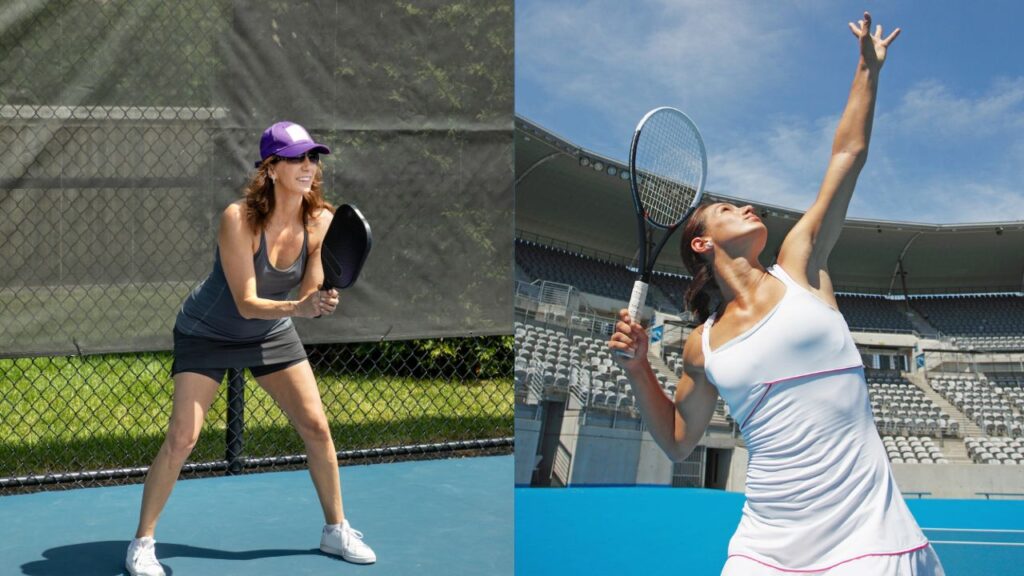
How These Affect Gameplay
1. Power vs. Control
- Pickleball paddles: Lighter and solid-faced, giving you more control, especially during dinks and net play.
- Tennis rackets: Heavier and strung for explosive power, ideal for baseline play.
2. Spin Potential
- Pickleball paddles: Spin is possible, but more limited—requires technique and paddle angle rather than string interaction.
- Tennis rackets: Strings grab the balls, allowing topspin, slice, and other advanced spins.
3. Reaction Time
- Pickleball: Smaller, lighter paddle allows faster hand movements and quicker responses at the net.
- Tennis: Slower exchanges due to court size and racket weight, giving more reaction time but less agility at the net.
4. Fatigue & Physical Strain
- Pickleball: Lighter paddle and smaller court reduce joint strain and fatigue—ideal for all ages.
- Tennis: More physical demand on the body due to larger court, heavier racket, and longer matches.
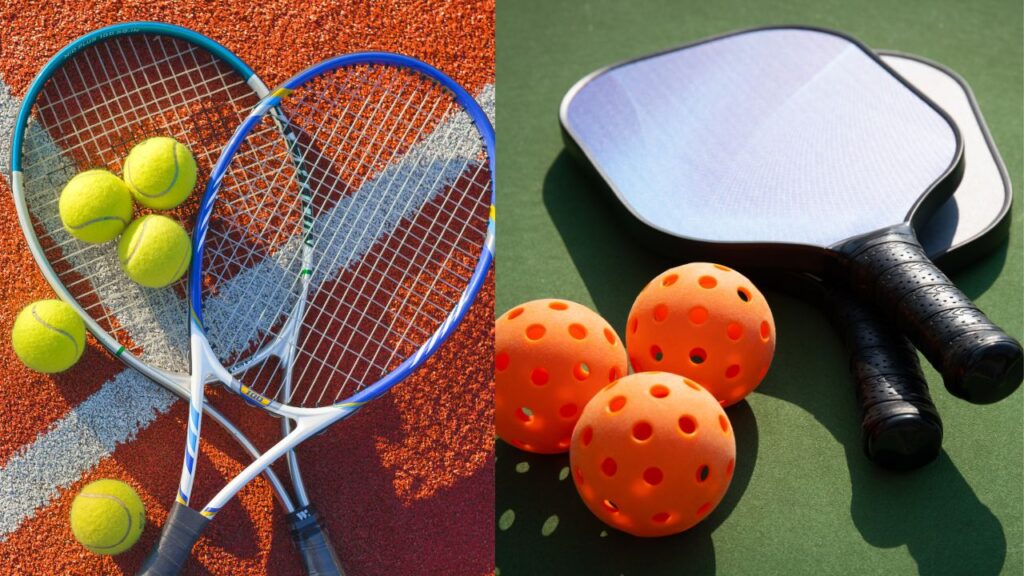
Transitioning from Tennis to Pickleball
1. Shorten Your Swing
- Tennis: Long, looping swings.
- Pickleball: Quick, compact strokes are more effective.
2. Adjust Your Grip
- Use a continental or eastern grip for better control in pickleball.
- Avoid extreme western grips that work for topspin in tennis.
3. Respect the Kitchen
- You can’t volley in the 7-foot non-volley zone (the kitchen).
- Learn smart positioning and avoid rushing the net too soon.
4. Choose the Right Paddle
- Start with a midweight paddle (~7.8 oz) for a balance of power and control.
- Prefer two-handed backhands? Look for a paddle with an elongated handle.
If you’re used to a thicker grip, add an overgrip to mimic your tennis feel.
5. Learn the Soft Game
- Focus on dinks, third-shot drops, and resets.
- Unlike tennis, finesse often beats force in pickleball.
The Takeaway
Pickleball paddles and tennis rackets each suit their game. Paddles are built for fast hands, soft touches, and control. Rackets are made for powerful swings and spin.
Tennis players can make the switch smoothly with a few adjustments. Try different paddle types, focus on finesse, and enjoy the ride. Both games are fun—and mastering both makes you a more complete player.
Ready to evolve your game? Grab a paddle and hit the court!