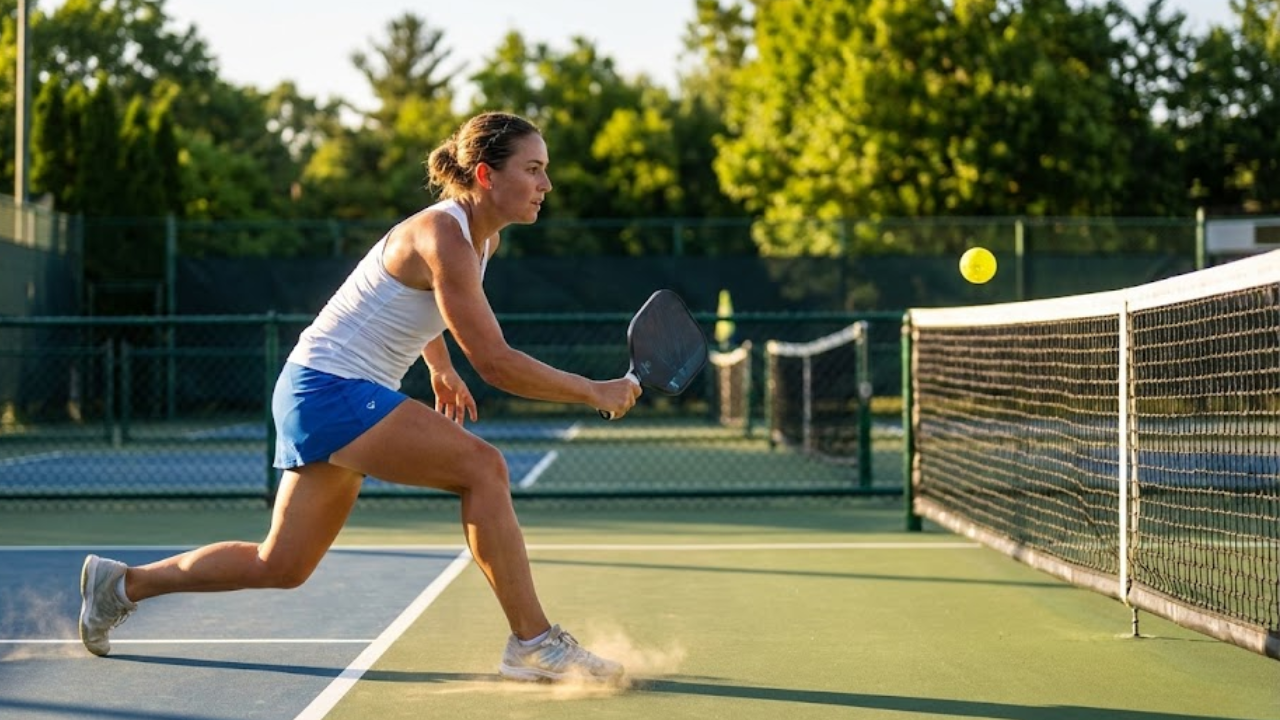
Pickleball players often focus on paddles, spin, and shot selection, but one of the biggest differences between average and consistent winners comes down to something far simpler: footwork. Good footwork keeps you balanced, improves shot accuracy, and puts you in control of rallies. Poor footwork leads to rushed swings, pop-ups, and unnecessary errors.
If you want to improve your pickleball game without hitting harder or buying new gear, start with how you move.
This guide breaks down the most important pickleball footwork fundamentals and explains how better movement helps you win more points across every area of the court.
Why Footwork Matters More Than You Think
In pickleball, time and balance matter more than power. Because the court is small and rallies happen quickly, your ability to move efficiently often determines whether you stay in control or get rushed into mistakes.
Good footwork helps you:
- Reach the ball earlier
- Stay balanced through contact
- Recover faster after each shot
- Reduce unforced errors
- Maintain strong positioning at the kitchen line
Many common pickleball mistakes, especially pop-ups and late volleys, are not caused by poor technique but by poor movement leading into the shot.
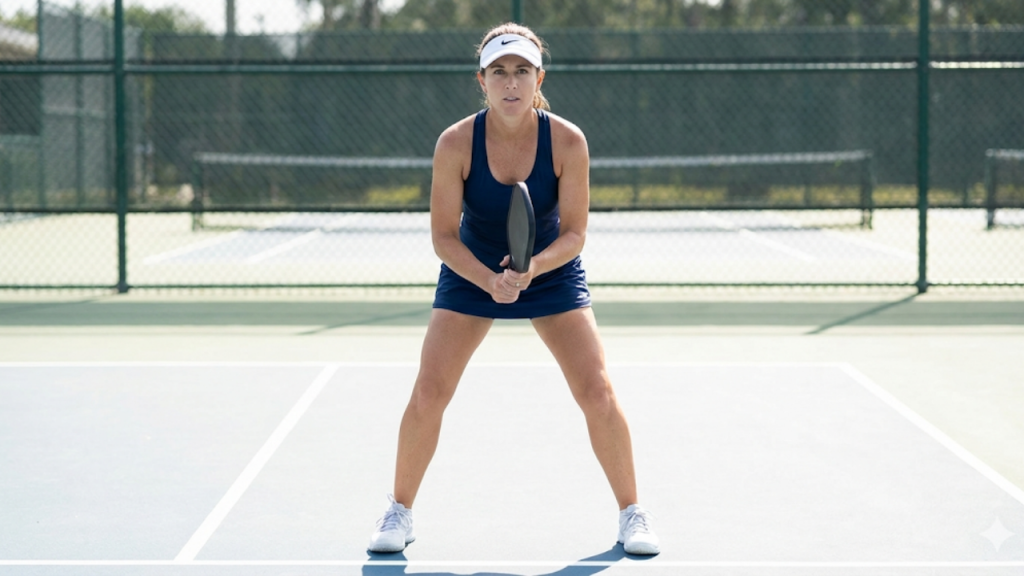
The Foundation: Athletic Ready Position
Every movement in pickleball starts from the ready position. Without it, even good footwork patterns break down.
A strong, ready position includes:
- Feet slightly wider than shoulder-width
- Knees bent with weight on the balls of your feet
- Paddle held up in front of your chest
- Eyes focused on your opponent’s paddle
This stance allows you to react quickly in any direction and prevents you from standing flat-footed, which is one of the biggest footwork killers in pickleball.
Split Step: The Timing Advantage
One of the most important yet overlooked footwork skills in pickleball is the split step. A split step is a small hop timed just as your opponent makes contact with the ball.
Why it matters:
- It keeps your feet active
- It helps you change direction faster
- It prevents slow reactions and late lunges
You should split the step before:
- Receiving a return
- Reacting to a volley at the kitchen
- Defending a fast shot aimed at your body
Players who skip the split step often feel late even when they are physically capable of reaching the ball.
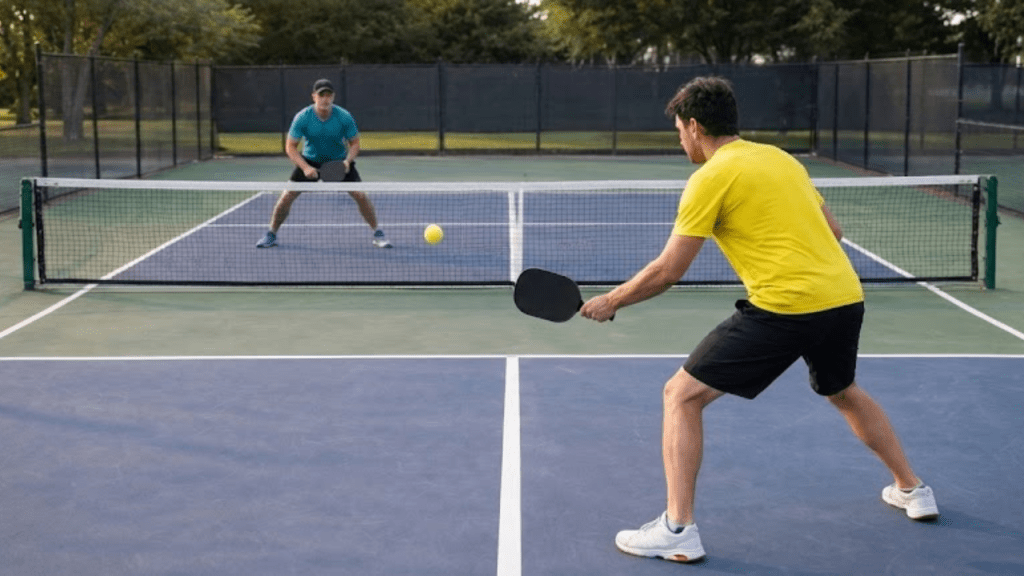
Lateral Movement: Stay Square and Balanced
Side-to-side movement is constant in pickleball, especially during dink rallies and kitchen exchanges. The key is moving without crossing your feet.
Use lateral shuffles instead of crossover steps:
- Keep your shoulders square to the net
- Take short, controlled steps
- Maintain a low center of gravity
Crossing your feet may feel faster, but it increases the risk of losing balance and makes recovery slower. Lateral shuffles allow you to stay ready for the next shot immediately.
Forward Movement: Advancing With Control
Moving forward is where many players lose control. This often happens after a third-shot drop or when chasing a short ball.
Key principles for forward movement:
- Move forward after hitting, not while hitting
- Stop your momentum before contact on short balls
- Use small steps instead of long lunges
If you swing while still moving forward, that extra momentum transfers into the ball, causing shots to sail long or pop up. Controlled stops lead to cleaner, more accurate shots.
Backward Movement: Avoid Backpedaling
Backpedaling is one of the most dangerous habits in pickleball. It throws off balance and makes clean contact difficult.
Instead of backpedaling:
- Turn slightly sideways
- Use small retreat steps
- Reset your stance before hitting
If you are forced backward, your goal should be recovery, not offense. Regain balance first, then look to reset the point with a controlled shot.
Kitchen Line Footwork: Winning the Most Important Area
The non-volley zone is where footwork matters most. At the kitchen line position, small adjustments make a huge difference.
Strong kitchen footwork includes:
- Constant small adjustment steps
- Staying on the balls of your feet
- Avoiding lunges unless necessary
- Recovering back to the line after each shot
Great kitchen players rarely reach or stretch dramatically. They move their feet first and let the paddle follow.
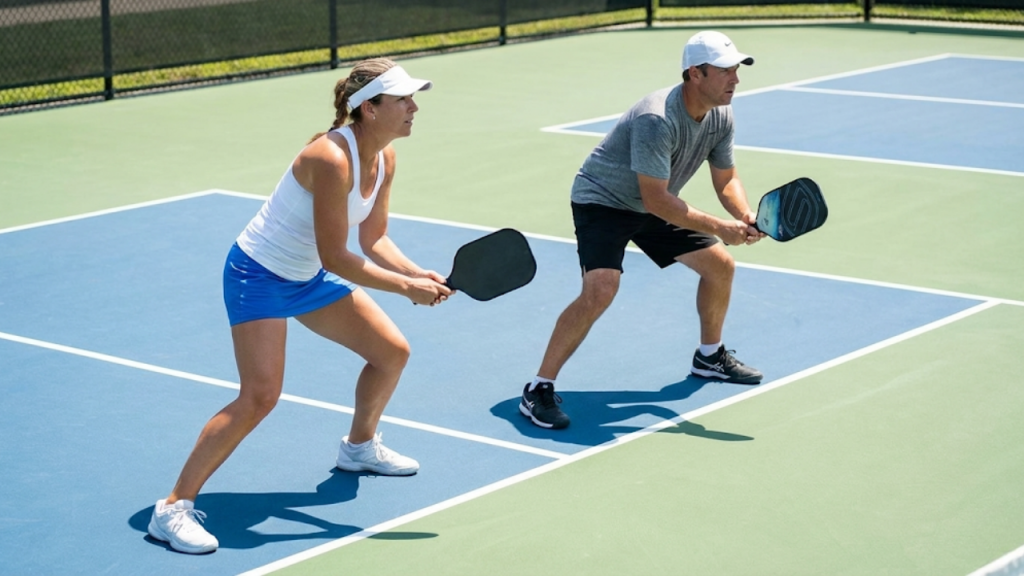
Doubles Footwork: Moving as a Unit
In doubles, footwork is not just individual. You and your partner must move together.
Key doubles movement principles:
- Slide laterally together when the ball moves crosscourt
- Maintain consistent spacing to avoid gaps
- Communicate early on balls down the middle
- Recover together after wide shots
When one player moves, and the other stays still, openings appear instantly. Teams that move as a unit force opponents to hit low-percentage shots.
Common Footwork Mistakes That Cost Points
Many players unknowingly sabotage their game with these habits:
- Standing flat-footed between shots
- Lunging instead of stepping
- Hitting while off balance
- Backpedaling on deep balls
- Rushing forward without stopping
Fixing just one of these can noticeably improve consistency.
Simple Drills to Improve Pickleball Footwork
You do not need complex training to improve movement.
Try these drills regularly:
- Shadow footwork: Practice moving side to side and forward without hitting the ball
- Split step drill: Focus on timing your split step with an opponent’s swing
- Dink movement drill: Shuffle laterally while maintaining balance and paddle position
- Stop-and-hit drill: Practice stopping before contact on short balls
Consistency comes from repetition, not speed.
Movement Is the Hidden Advantage
Pickleball rewards players who move well, not those who swing the hardest. Strong footwork gives you time, balance, and control. It turns defensive situations into neutral ones and neutral rallies into winning opportunities.
If you want to improve your pickleball game, start from the ground up. Better footwork leads to better positioning, cleaner shots, and smarter decision-making. Master your movement, and the points will follow.
At Evolute Pickleball, we believe progress comes from fundamentals done right. Footwork is one of the most powerful upgrades you can make to your game, and it costs nothing but focus and practice.