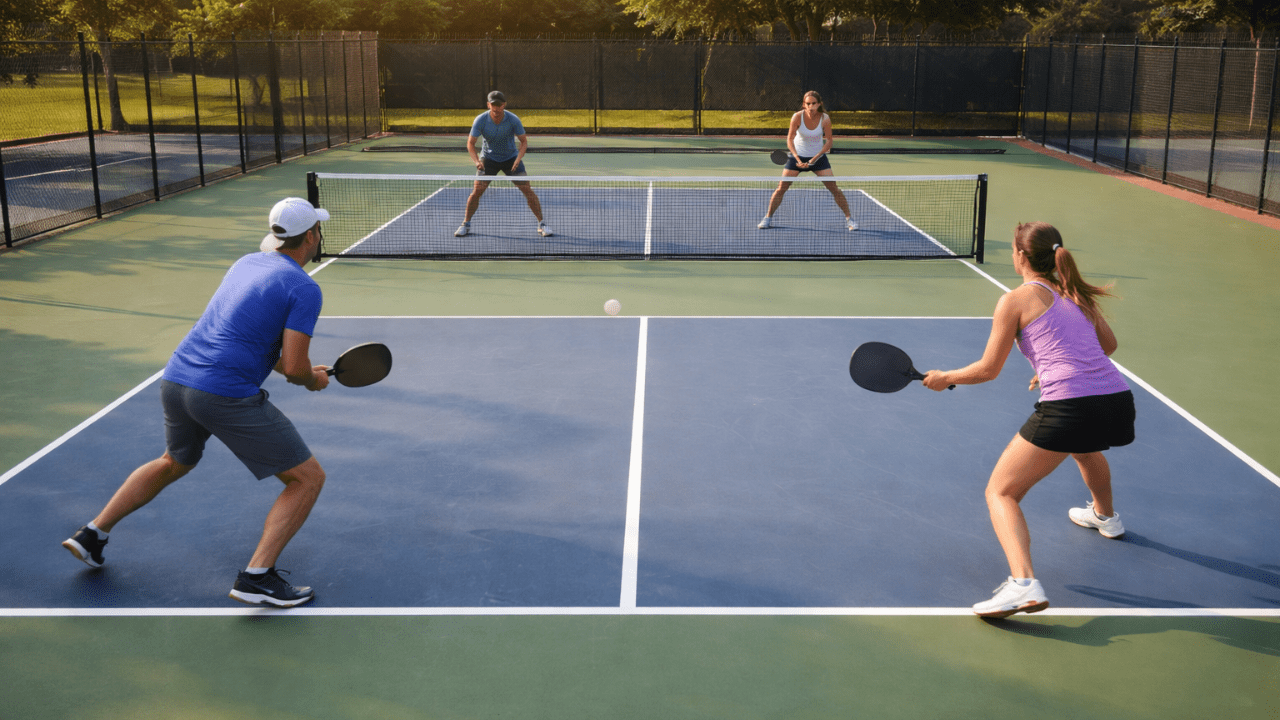
Pickleball is fun, fast, and competitive, but even the most seasoned players make small errors that can cost them big points. Many of these common pickleball mistakes are tied to specific zones of the court: the baseline, midcourt (or transition zone), and the non-volley zone (NVZ), often referred to as the kitchen.
In this guide, we’ll break down 7 frequent errors, two in each major zone, plus one bonus, and provide simple corrections that will help you play smarter and improve your pickleball game immediately.
Baseline Mistake 1: Stepping Too Far In After Serving
One of the most overlooked positioning mistakes is stepping forward after the serve. Since strong returns are often hit deep, stepping in too far puts you in a tough spot — forcing you to backpedal quickly and lose balance.
Fix:
- Stay behind the baseline after your serve.
- If you step in, recover behind the line before hitting your next shot.
- Get into a proper ready position: knees bent, paddle up, and eyes on the returner.
If you’re new to the game or brushing up on essentials, this guide on pickleball rules for beginners offers a great starting point.
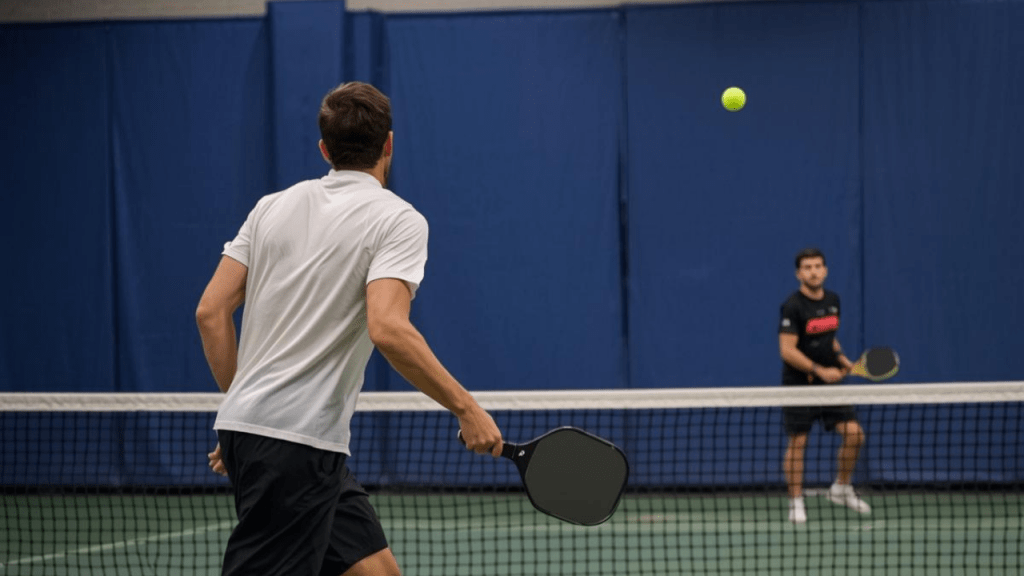
Baseline Mistake 2: Standing Too Close on Serve Returns
Crowding the baseline when returning serve is a recipe for trouble. A deep serve will push you back and make it harder to control your shot, affecting both your accuracy and power.
Fix:
- Position yourself 2–3 feet behind the baseline for returns.
- Adjust your approach based on the server’s style, but always remain balanced and prepared to adapt.
- Good footwork and pickleball positioning here can set you up for early control.
To stay up to date on how return positioning and serve rules continue to evolve, check out the latest USA Pickleball 2025 rule changes.
Midcourt Mistake 3: Rushing the Net Without Reading the Shot
Charging to the kitchen line too early — without watching how the third shot unfolds leaves you exposed to fastballs and attackable shots at your feet.
Fix:
- If your partner is hitting the third shot, watch the ball before moving forward.
- Read whether it’s a soft drop or a high floater.
- Only advance when the drop is low and neutralizes the opponent’s position.
To better understand when and how to move forward, explore these third shot drop techniques used in modern pickleball strategy.
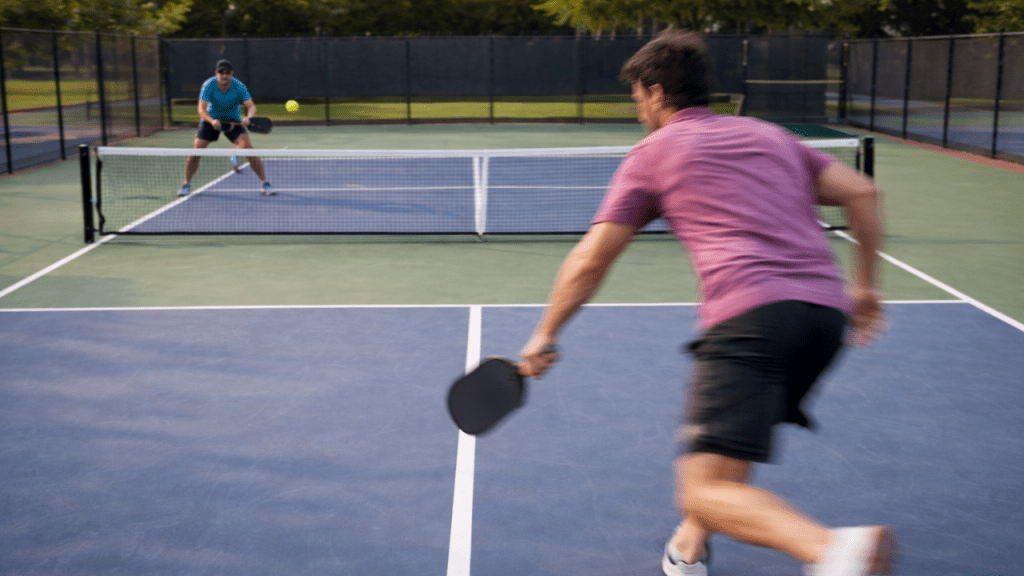
Midcourt Mistake 4: Not Stopping Before Hitting Short Balls
Chasing short balls and swinging while still in motion causes errors. Forward momentum often transfers into the ball, leading to long shots or easy pop-ups for opponents.
Fix:
- Stop your feet before hitting a short ball.
- Plant your stance, make a clean, balanced swing.
- After contact, move into the NVZ with control and intent.
NVZ Mistake 5: Ignoring Your Opponent’s Kitchen
Beginners often focus solely on staying out of their own kitchen zone — and ignore offensive strategy on the opponent’s side. The kitchen line is where games are won or lost.
Fix:
- Shift your mindset to include pickleball kitchen strategy.
- Use soft dinks to pull opponents up and pressure them into errors.
- Anticipate pop-ups and be ready to counter with precision.
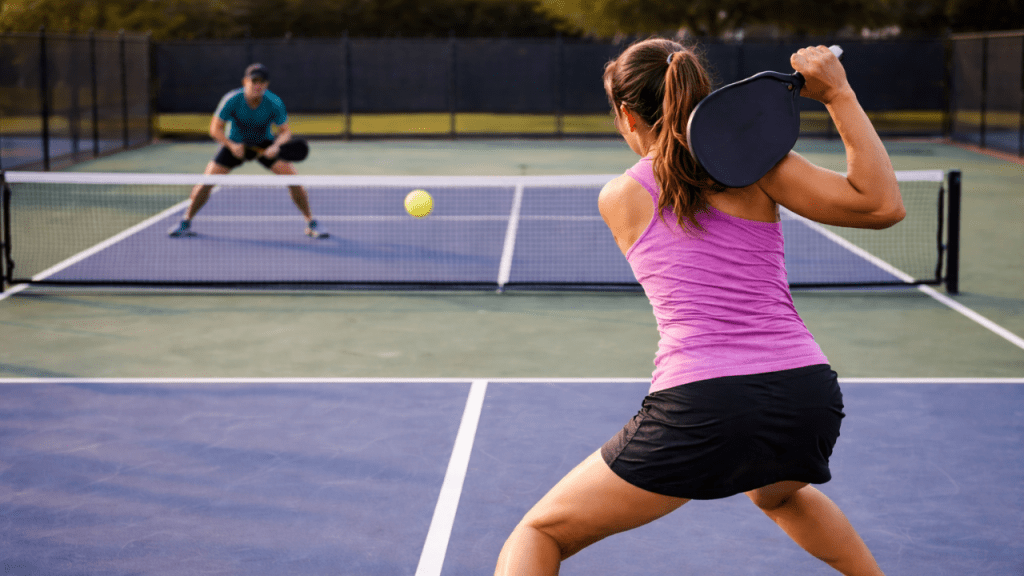
NVZ Mistake 6: Using Big Swings at the Net
Large, dramatic swings at the kitchen line often do more harm than good. They slow your recovery and open up your defense to quick counters.
Fix:
- Keep swings short and compact — control over power.
- On dinks, use minimal motion.
- On volleys, punch lightly and return to the ready position instantly.
Bonus Mistake 7: Poor Partner Communication
In doubles, lack of communication is one of the most common pickleball mistakes. Miscommunication can result in missed shots, collisions, or both players backing off.
Fix:
- Call “mine” or “yours” clearly on every shared shot.
- Use short verbal cues like “switch,” “middle,” or “you.”
- Regroup after each point to stay mentally and physically aligned.
Play Smarter, One Fix at a Time
Each of these mistakes stems from overlooked footwork, poor timing, or positional habits. But the good news? Every single one is easy to correct with awareness and repetition.
Whether you’re working on pickleball positioning, sharpening your kitchen line strategy, or just trying to improve your pickleball game overall, start with one fix, focus your practice, and build from there.
At Evolute Pickleball, we’re here to help players of all levels improve with confidence, one smart step at a time.